KIWITA
← Back to Evidence

For New Product Development and R&D reference only. Not intended for consumers.

UMO® Patent Technology

From silicon nutrition to the UMO patented hexagon, one step at a time.

UMO® is concentrated water-soluble silicon, in liquid and powder form.

In Japan it is used in high-end supplements, skincare, drinks, pet products and agriculture.

1 | Silicon Element

What Is Silicon?

Silicon (Si) is a pure element, and the second most abundant element in Earth’s crust.
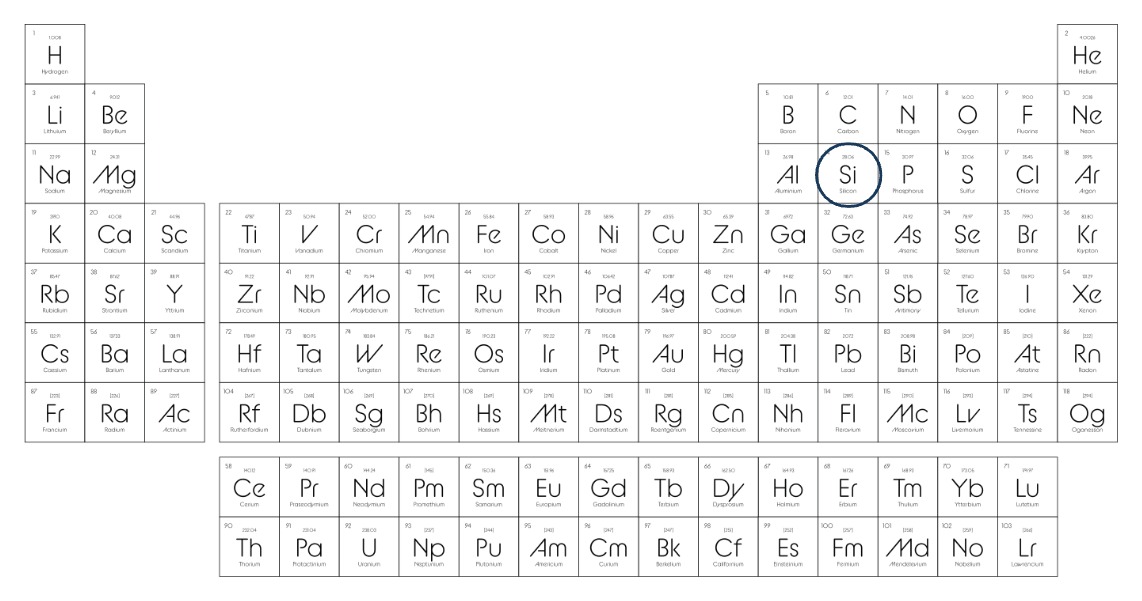
Periodic table of elements: Silicon (Si) is element 14.
Top Major Elements in the Earth’s Crust (%)
Oxygen
46.6%
Silicon
27.7%
Aluminium
8.1%
Iron
5.0%
Calcium
3.6%
Sodium
2.8%
Others
6.2%

Where Does Silicon Exist?

In nature, silicon rarely exists alone. It forms silicon dioxide (SiO₂) or silicates, found in quartz, sand and rocks, because it bonds readily with oxygen.
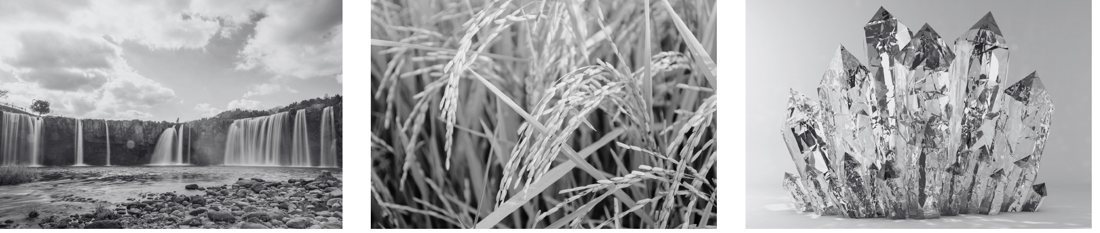
Mineral water
H₄SiO₄Orthosilicic acid
Rice husk
SiO₂Silicon dioxide
Quartz (crystal)
SiO₂Silicon dioxide

Classification of Silicon

Only non-carcinogenic (amorphous) silicon is safe and edible for humans and pets.
Crystallised Silicon✕
Carcinogenic and not edible
Non-Crystallised Silicon✓
Non-carcinogenic and edible
!
Health warning: crystalline siliconThe WHO’s International Agency for Research on Cancer (IARC) lists crystalline silica as a Group 1 carcinogen. Never eat it.
WHO CICAD 24 Crystalline silica, quartz (2000)
WHO & IPCS (2000). Concise International Chemical Assessment Document 24: Crystalline silica, quartz. World Health Organization, Geneva.
IARC (2012). Crystalline silica, quartz and cristobalite. IARC Monographs Vol. 100C, pp. 355–405.

About Silicon Nutrient

Only silicon in silicic acid form is bioactive for humans. It is a nutrient your body can absorb and use to support health and beauty. All the benefits of silica and silicic acid come from the silicon, not from the oxygen or hydrogen.

But not all non-crystalline silicon is a nutrient for living things.
Class of silicon
✕ Crystallised silicon
Carcinogenic and not edible
✓ Non-crystallised silicon
Non-carcinogenic and edible
✕ Non‑bioactive
Not used by the body
SiO₂·nH₂OHydrated silicaFlow agent (anti-caking), moisture and oil control
Mg₂SiO₄Magnesium silicateMoisture absorber
✓ Bioactive (nutrition)
Used by the body
H₄SiO₄Silicic acidFound in fruit and mineral water
Iler, R. K. (1979). The Chemistry of Silicon. Wiley-Interscience.

What Is Silicic Acid?

Silicic acid is silicon combined with water (silicon + oxygen + hydrogen).

Si
Silicon
Crystallised
Pure element
+ O₂− O₂
SiO₂
Silica
Crystallised
Crystal, sand, rock
+ H₂O− H₂O
H₂SiO₃
Metasilicic acid
≠ Amorphous
Transient form
+ H₂O− H₂O
H₄SiO₄
Orthosilicic acid
Amorphous
In food and water, as a trace mineral
In nature, it takes 100–1,000 years for crystalline silicon to turn into amorphous silicon through chemical weathering.
Crystallised›Amorphous
Iler, R. K. (1979). The Chemistry of Silicon. Wiley-Interscience.

Silicon Is a Trace Mineral

Our body needs 5 core nutrients.
Silicon belongs to one of them: minerals.

1CarbohydratesMain energy source
2ProteinBuilds and repairs the body
3FatsStore energy, protect organs
4VitaminsKeep the body running
5MineralsBones, teeth, body functionsSilicon is here ✓
Based on recommendations from WHO and FDA.
More than 60 minerals can be found in the human body.
About 20 are closely linked to normal body function.
Macro mineralsMore than 0.01% of the body.
Need more than 100 mg a day.
11Na12Mg15P16S19K20Ca
Trace minerals0.01% or less of the body.
Need less than 100 mg a day.
3Li5B9F14Si24Cr25Mn26Fe27Co28Ni29Cu30Zn34Se42Mo53I
National Health Commission of the PRC (WS/T 476—2015);
FAO/WHO; National Academies Dietary Reference Intakes.
Official bodies that recognise silicon as a trace mineral
USA | NIHEU | EFSAJapan | Institute of Functional Foods and NutritionGermany | BfRMalaysia | MADSASingapore | HSACanada | Health CanadaTaiwan | TFDAAustralia | TGAGlobal | WHO / FAO
Summarised by KIWITA from each organisation’s official website.

Silicon in Our Food

Studies suggest we need about 40 mg of silicon a day. Food holds very little silicon, so you would have to eat a mountain of it to get that much.

Amount of food needed for 40 mg of silicon
285.7 kg
137.9 kg
81.6 kg
78.4 kg
66.7 kg
20.0 kg
15.4 kg
Cabbage0.014 mg per 100 g
Onion0.029 mg per 100 g
Daikon radish0.049 mg per 100 g
Cucumber0.051 mg per 100 g
Banana0.060 mg per 100 g
Apple0.200 mg per 100 g
Strawberry0.260 mg per 100 g
Cabbage | 0.014 mg per 100 g
285.7 kg
Onion | 0.029 mg per 100 g
137.9 kg
Daikon radish | 0.049 mg per 100 g
81.6 kg
Cucumber | 0.051 mg per 100 g
78.4 kg
Banana | 0.060 mg per 100 g
66.7 kg
Apple | 0.200 mg per 100 g
20.0 kg
Strawberry | 0.260 mg per 100 g
15.4 kg
Based on the Japan Silicon Medical Science Society.

Silicon Fades With Age

By age 30, the silicon left in the body is about half of the amount at birth.
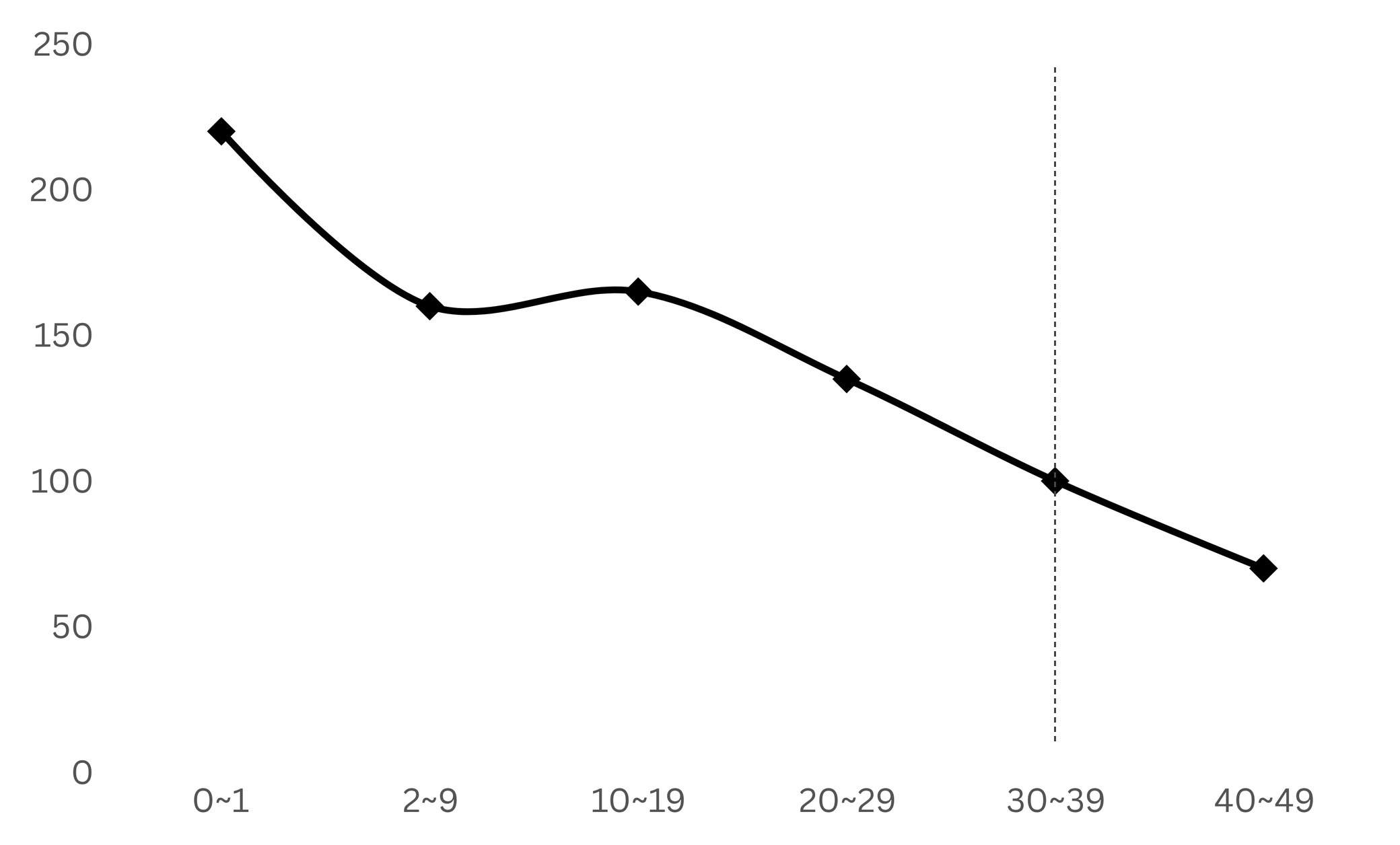
Silicon in the body by age (0–1 to 40–49).
Silicon (per 100 mg of nitrogen)
Silicon in the body by age
Age (years)
·Reason | The human body cannot make minerals, so every mineral has to come from food. Modern diets rely on processed food, which lacks many of them, including silicon.
When the body lacks silicon
Weaker bonesPoorer skin and nailsWeaker immunitySlower tissue repairLess collagenHeart and vessel problemsWeaker hair
Bendz & Lindqvist (1978); Jugdaohsingh et al. (2004); Japan Silicon Medical Science Society (jmsis.jp).

Silicon Leads Mineral Supplement Growth

Mineral supplements, ranked by 2025 market size.

↑ 9.6%Silicon / Silica has the highest growth rate of all mineral supplements.
No
Mineral
Market size, 2025 est.
Market size, 2032 ~ 2035
Growth rate (CAGR)
1
Calcium
$5.97 Billion
$9.82 Billion (by 2033)
6.1%
2
Magnesium
$4.72 Billion
$9.66 Billion (by 2034)
7.4%
3
Iodine
$3.96 Billion
$6.58 Billion (by 2032)
7.5%
4
Iron
$2.79 Billion
$3.89 Billion (by 2034)
4.1%
5
Zinc
$2.46 Billion
$3.92 Billion (by 2035)
4.8%
6
Silicon / Silica
$1.72 Billion
$2.49 Billion (by 2029)
9.6%
7
Potassium
$1.15 Billion
$1.52 Billion (by 2030)
5.7%
8
Selenium
$505 Million
$1.03 Billion (by 2035)
7.8%
Source: “Mineral Supplements Market Report 2025: Global Size, Trends and Forecasts (2025–2029)”
Publisher: ResearchAndMarkets.com ID: 5983892 / 6075459
Summarised by KIWITA
2 | Only Silicic Acid Works

How the Body Takes It In

Only silicic acid is small enough to pass through the gut wall.
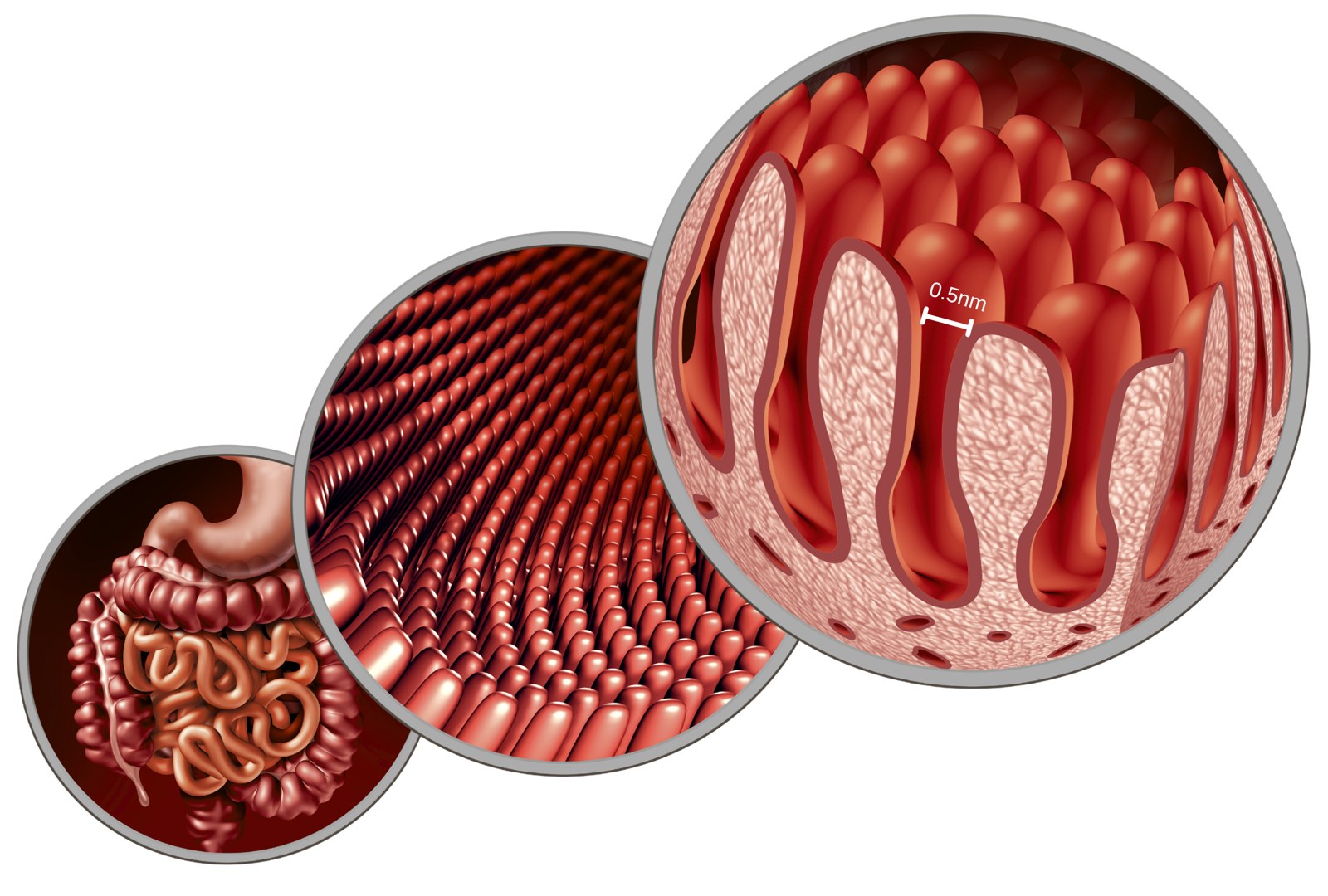
The gut wall has pores about 0.5 nm wide.
Gut pore
0.5 nmOpening in the gut wall
Silicic acid✓
0.4 nm · H₄SiO₄Small enough ✓
Bigger silicon✕
Too bigCannot pass ✕
1EatSilicon from food
2Stomach acidBreaks it into silicic acid
3BloodCarried around the body
4UsedBone | connective tissue | skin
5OutExtra leaves in urine
Studies on how well silicic acid is absorbed
EU regulator | 2009Silicic acid absorbed
Polymeric silica not
EFSA reviewed the human studies. Orthosilicic acid is absorbed from the gut and quickly leaves in urine. Polymeric silicic acid is not detectably absorbed.EFSA ANS Panel (2009). Calcium silicate and silicon dioxide/silicic acid gel added to food supplements. EFSA Journal, 1132.
Human | 2009Silicic acid 43%
Colloidal silica 1%
Silicon absorbed from one dose (urine, 6 h). Magnesium trisilicate 4%. Smaller units are absorbed better.Sripanyakorn et al. (2009). British Journal of Nutrition, 102, 825–834.
Human | 8 people≈ 50% absorbed
 
Median absorption of silicic acid in water. Range 22–75%.Reffitt et al. (1999). Journal of Inorganic Biochemistry, 76(2), 141–147.
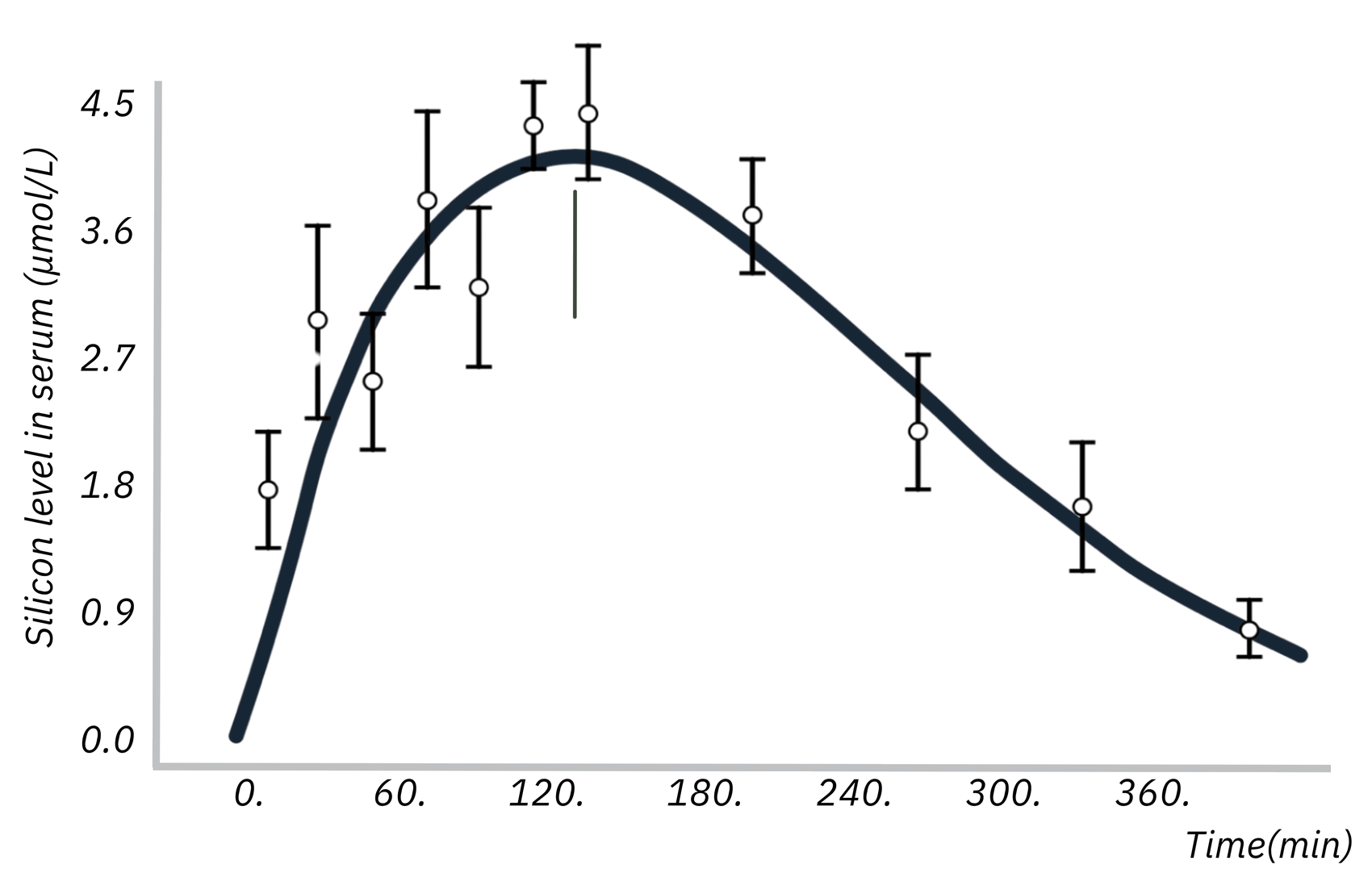
No Side Effects with Amorphous Silicon
Silicon level in serum (µmol/L) over 0–360 minutes
After intake, silicon in the serum rises, peaks about 120 minutes after absorption, then falls.Excess leaves in urine within about 6 hours, so silicon does not build up in the body.
Jugdaohsingh R. et al. (2002). Am J Clin Nutr.
Jugdaohsingh R. (2007). Silicon and Bone Health. J Nutr Health Aging 11(2):99–110.
3 | The Problem of Silicic Acid

The Problem: Monomer Silicic Acid Is Unstable

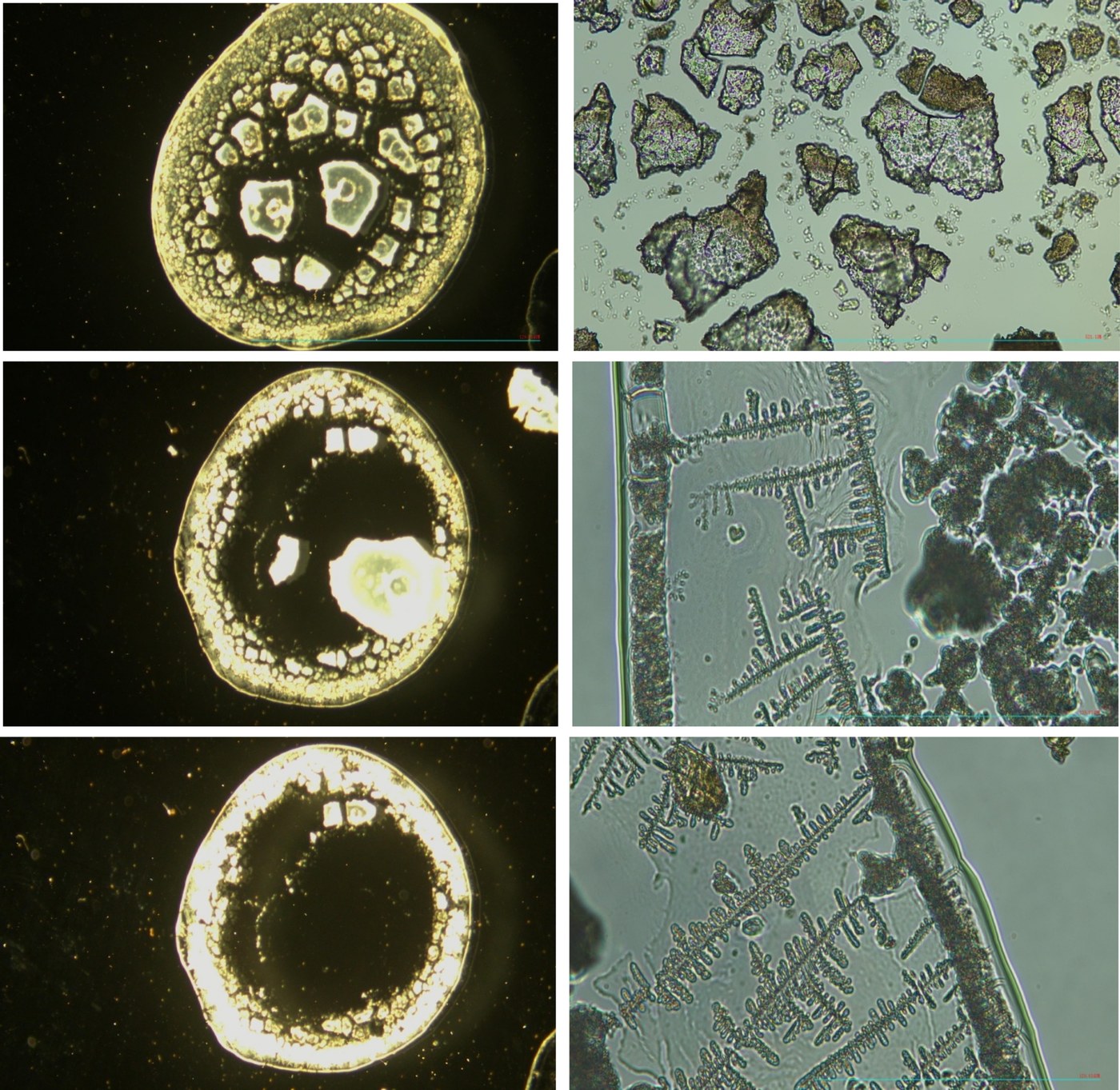
Monomer silicic acid is an unstable molecule. It condenses and polymerises: single molecules join into chains, then clumps, then gel.
Good✓
H₄SiO₄Monomer | 0.4 nm
→
Condenses & polymerises✕
Polysilicic acid10–100+ nm
→
Result
GelCannot be absorbed ✕
Triggered by concentration (above 46.7 mg per 100 mL) | pH | temperature | mineral content.
·Big clumps cannot pass the gut wall.
·Once clumped, stomach acid cannot break it back into usable silicic acid inside the body.
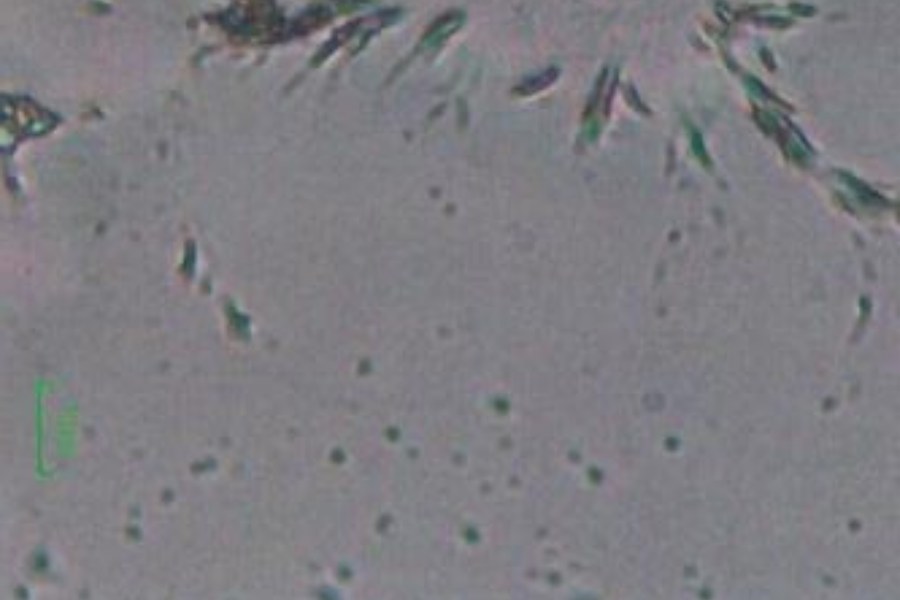
Polysilicic acid (silicon mineral) in gel form, under the microscope.
Iler (1979); Nakajima, T. (2019). The Connecting Power of Life: Water, Silicon, and Qi. 中島敏樹 (2019)《結び合う命の力》.
4 | UMO’s Patent Tech

The Fix: A Hexagon

UMO’s patented technology reshapes single silicic acid into a six-sided ring: hexagonal oligomeric silicic acid, Si₆O₆(OH)₁₂.
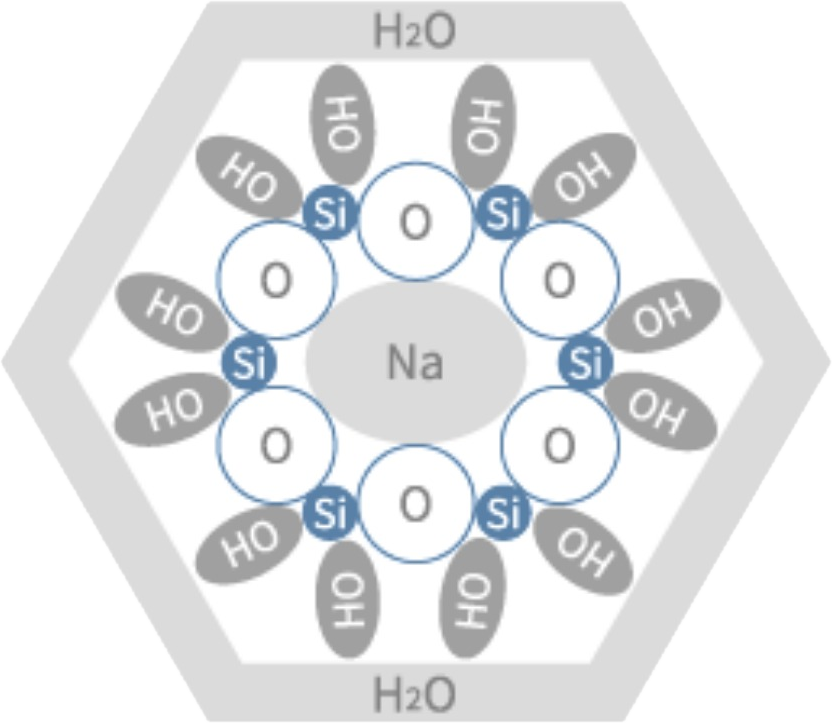
Hexagonal oligomeric silicic acid Si6O6(OH)12 molecular structure
FormulaSi₆O₆(OH)₁₂
StructureHexagonal ring
TypeOligomeric silicic acid
Size0.8–1.0 nm
Molecular weight468.6 Da
Before use✓
Stays stableLiquid stays clear. No crystals while stored.
After use✓
Absorbed betterStomach acid opens the hexagon into single silicic acid (0.4 nm), smaller than the 0.5 nm pores of the gut wall, so the gut can absorb it.
Japanese patent publications
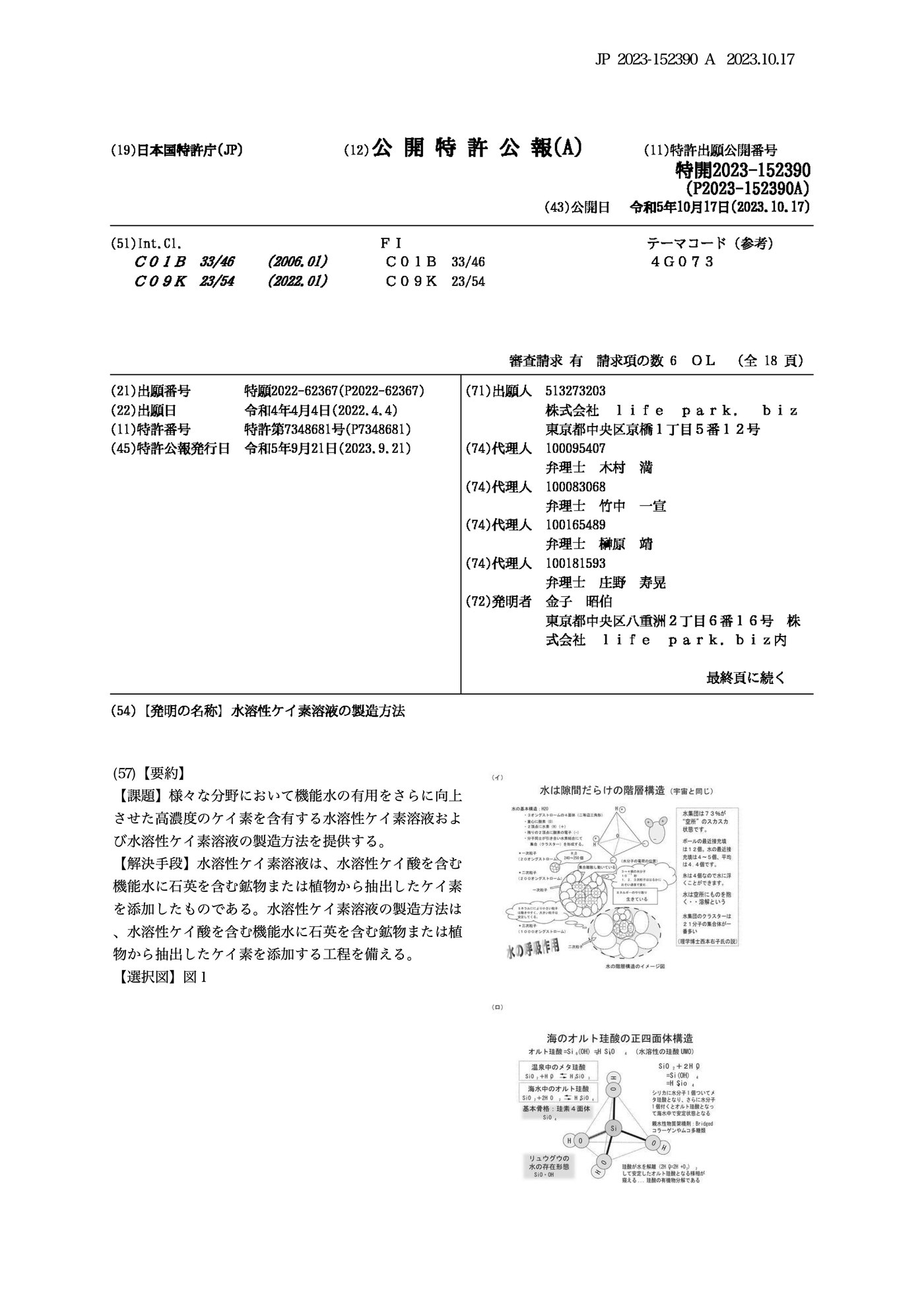
Method for producing water-soluble silicon solutionJP 2023-152390 APublished 17 Oct 2023Method for producing water-soluble silicon solution
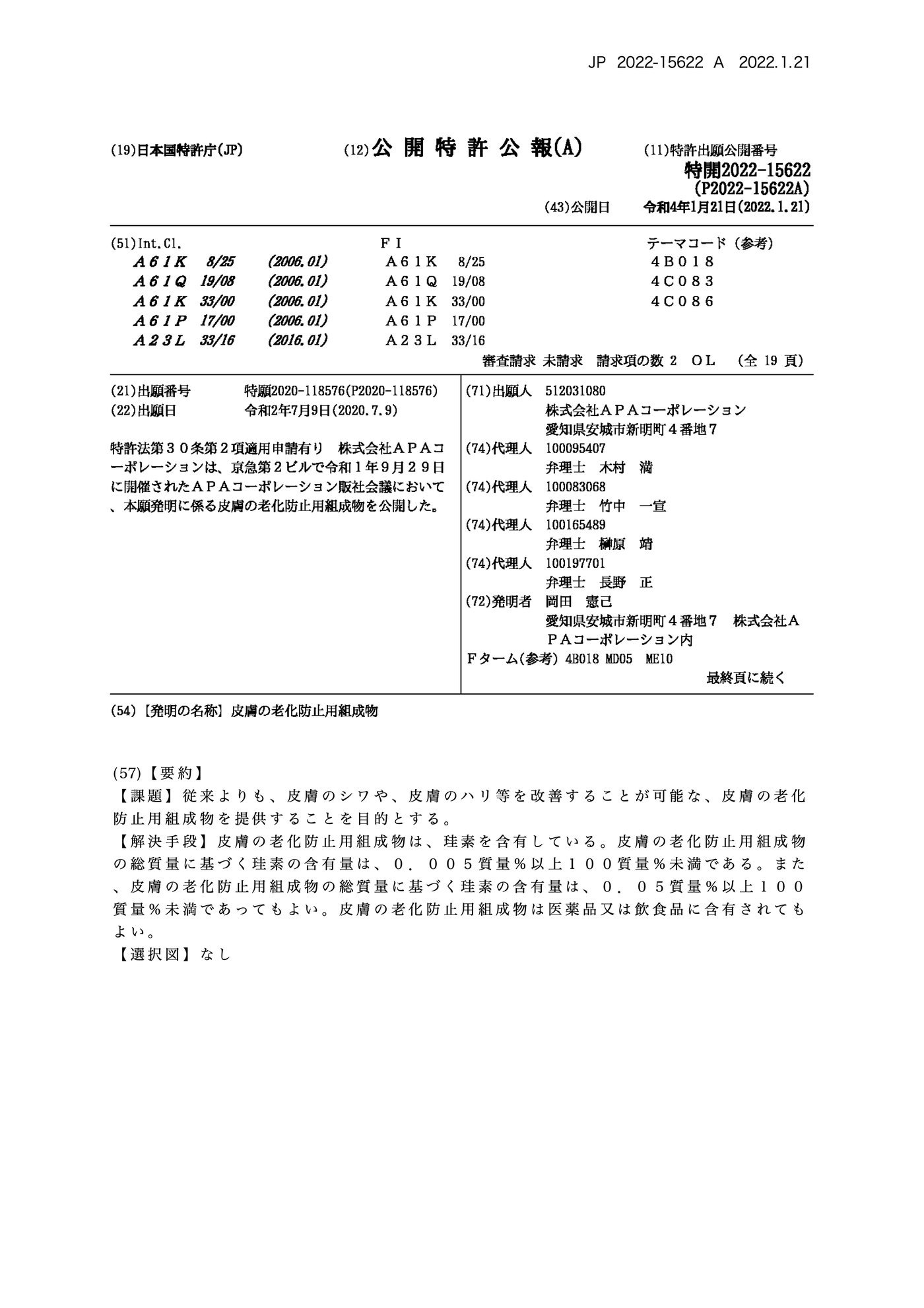
Composition for preventing skin agingJP 2022-015622 APublished 21 Jan 2022Composition for preventing skin aging
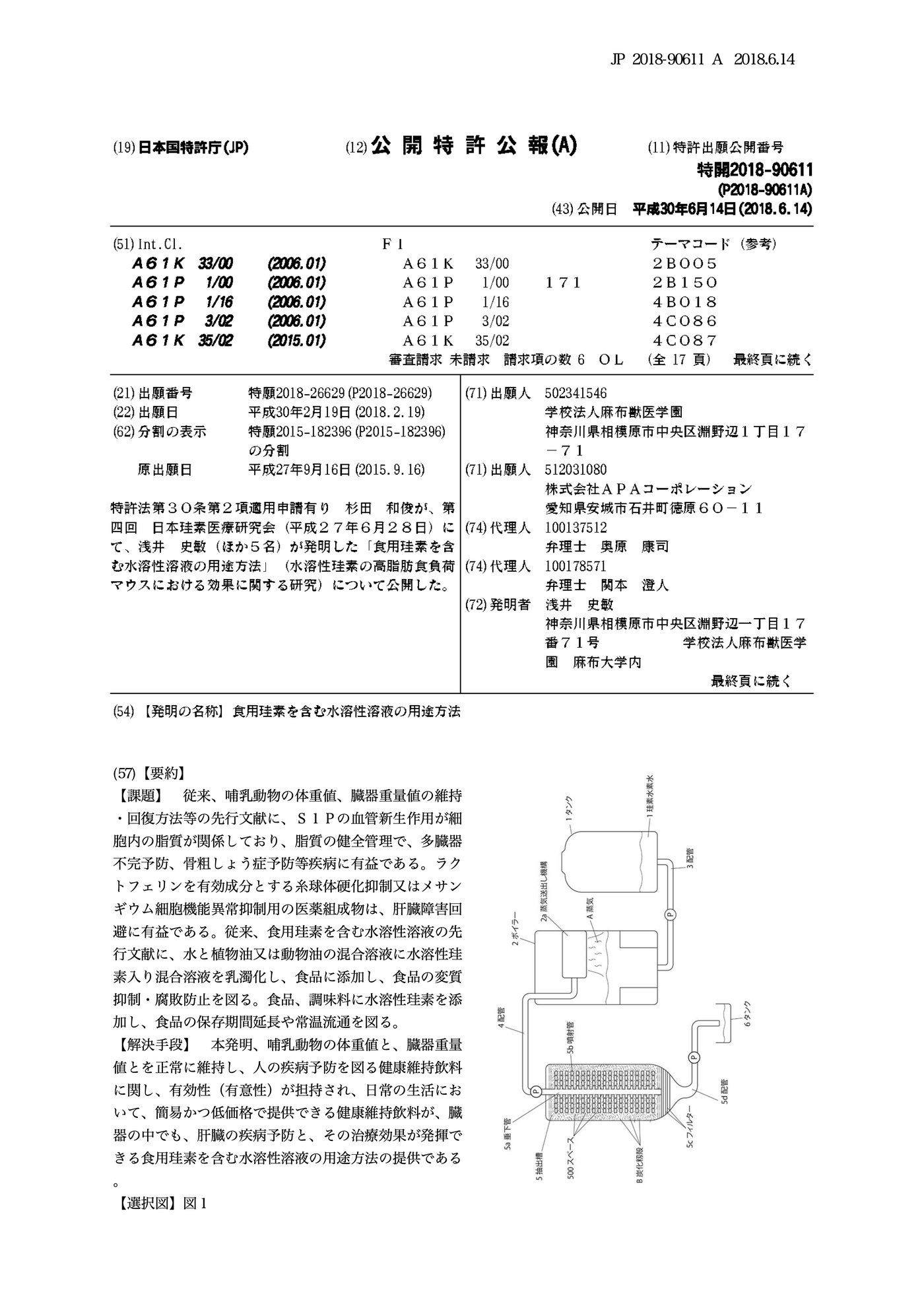
Method of use for a water-soluble solution containing edible siliconJP 2018-090611 APublished 14 Jun 2018Method of use for a water-soluble solution containing edible silicon
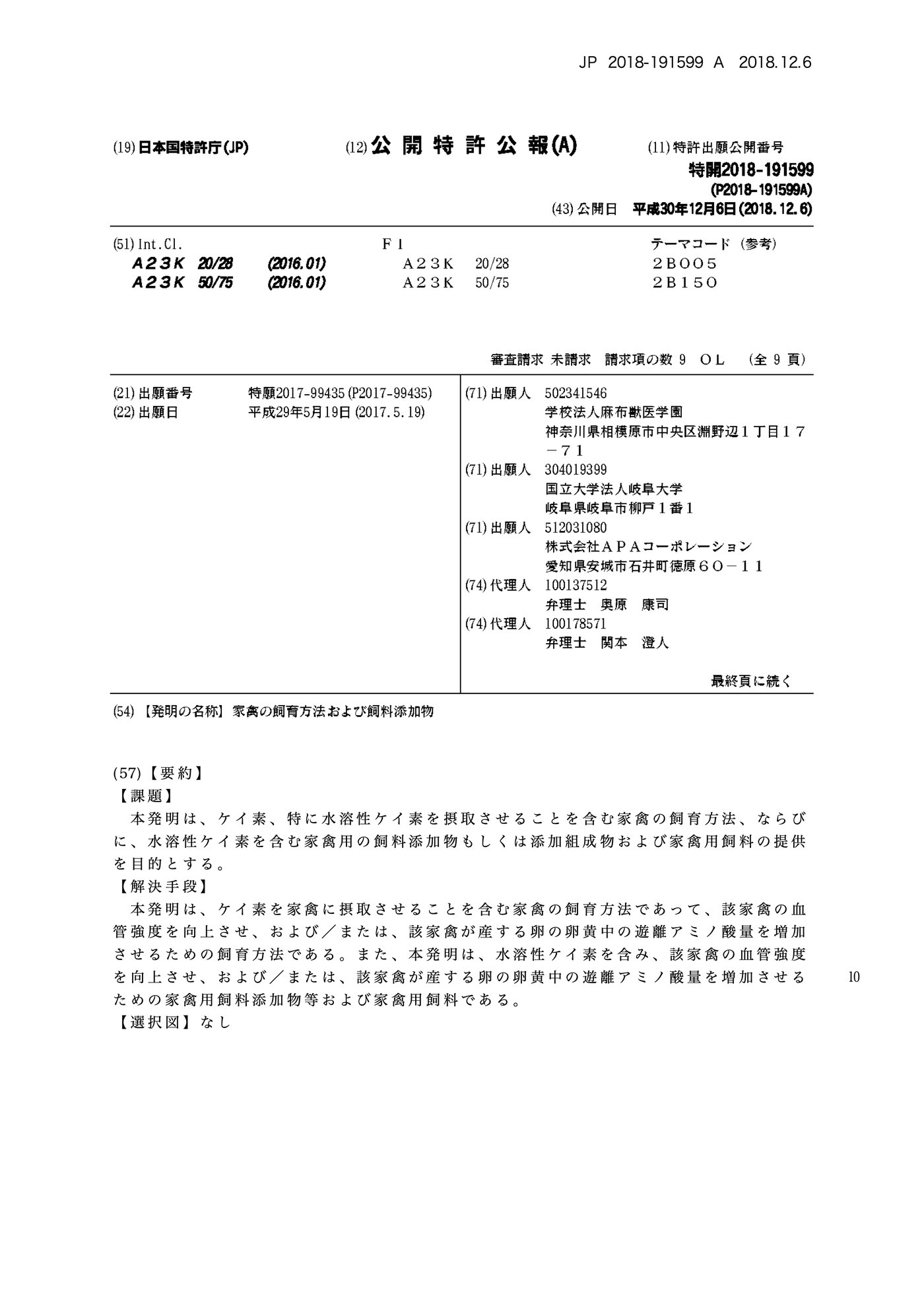
Method for raising livestock and feed additiveJP 2018-191599 APublished 6 Dec 2018Method for raising livestock and feed additive
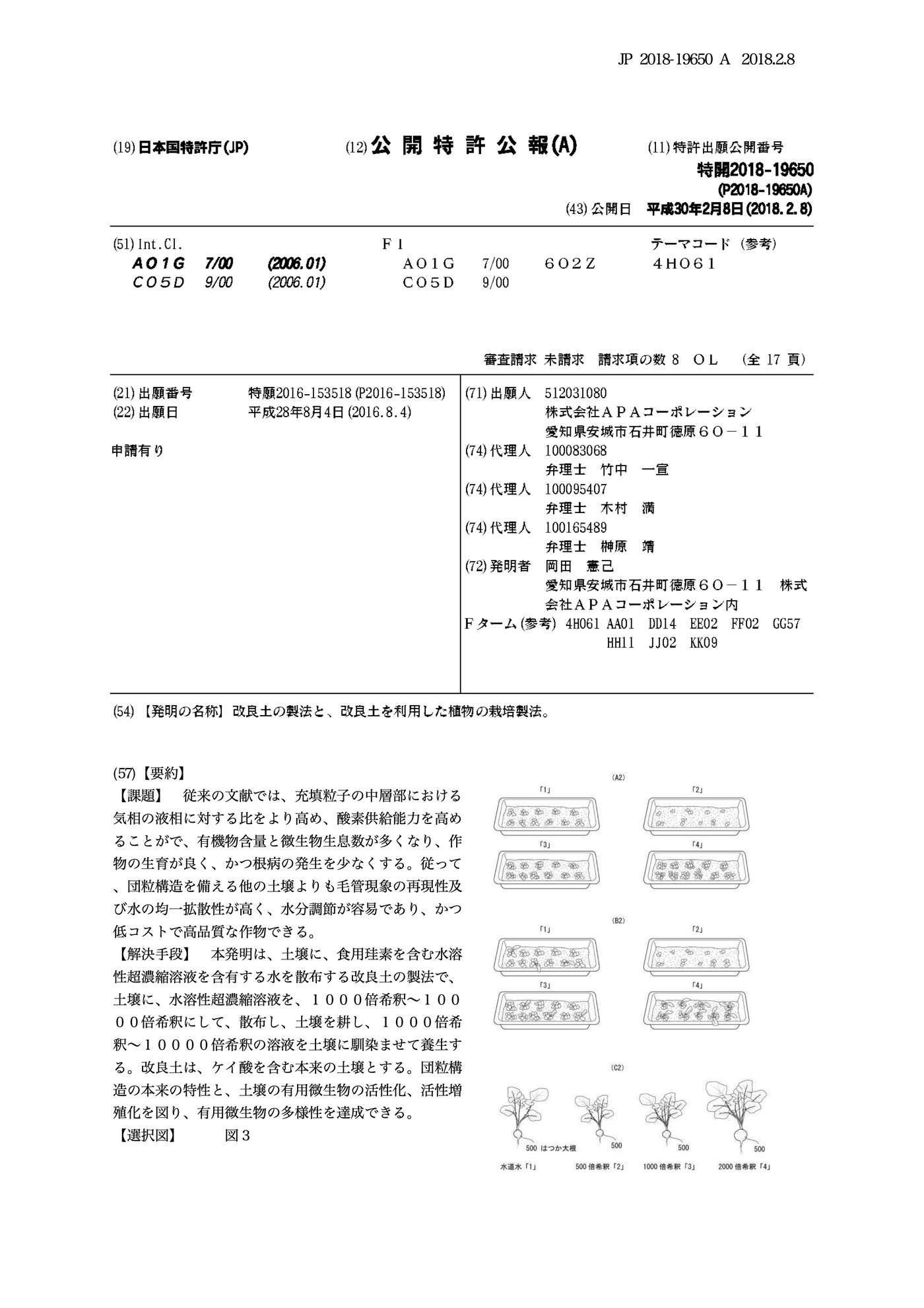
Method for producing improved soil and method for cultivating plants using improved soilJP 2018-19650 APublished 8 Feb 2018Method for producing improved soil and method for cultivating plants using improved soil

Why Is a Hexagon Stable?

Water molecules link into tiny hexagon networks. A hexagonal molecule fits that network, so it stays stable in liquid.
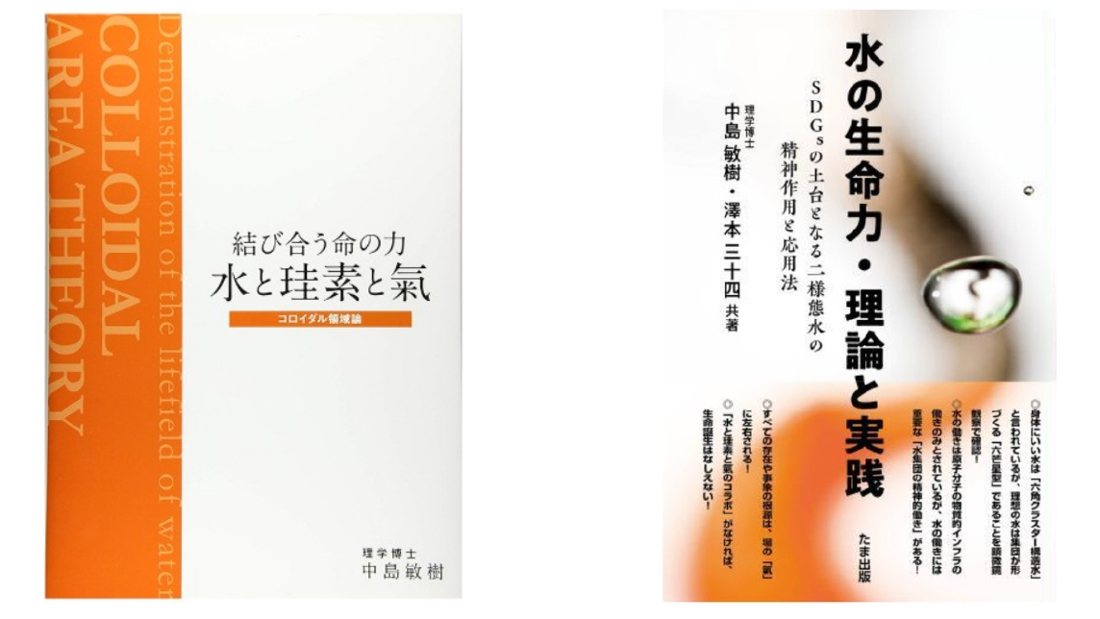
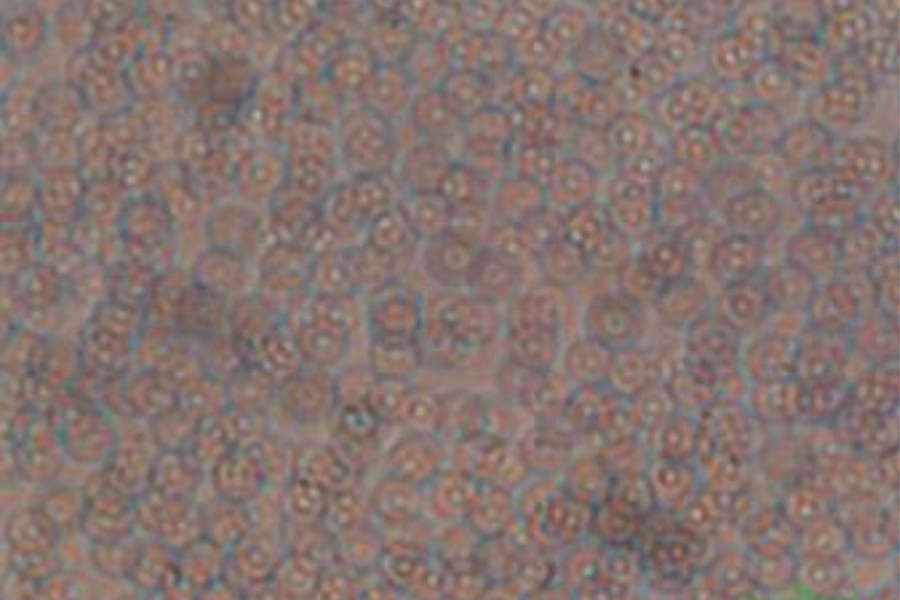
Water molecules (H₂O) link into a hexagon network.
HHHHHHHHHHHHOOOOOO120°120°120°120°120°120°HHHHHHHHHHHHHHHHHHHHHHHHHHHHHHHHHHHHHHHHHHOOOOOOOOOOOOOOOOOOOOOOOO120°120°120°120°120°120°120°
Product Stability
TheoryProf. Nakajima, colloid theory→Hexagonal structures are relatively stable in liquid
WaterWater is H₂O→H₂O molecules join at 120°→Forming a hexagon structure
UMOHexagonal molecule→Fits the water network→More stable in liquid
Prof. Toshiki Nakajima, colloid theory: 《結び合う命の力 水と珪素と氣》, 《水の生命力・理論と実踐》.
Proof 1 | UMO is still stable after one year.
UMO SilicaIonised Silica
Fresh productionUMO Silica, Fresh productionIonised Silica, Fresh production
After 1 yearUMO Silica, After 1 yearIonised Silica, After 1 year
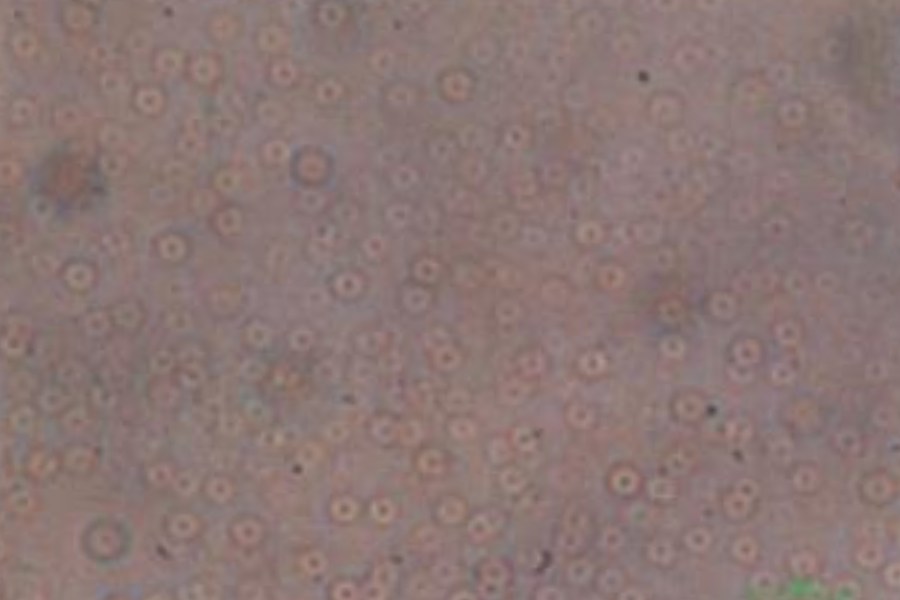
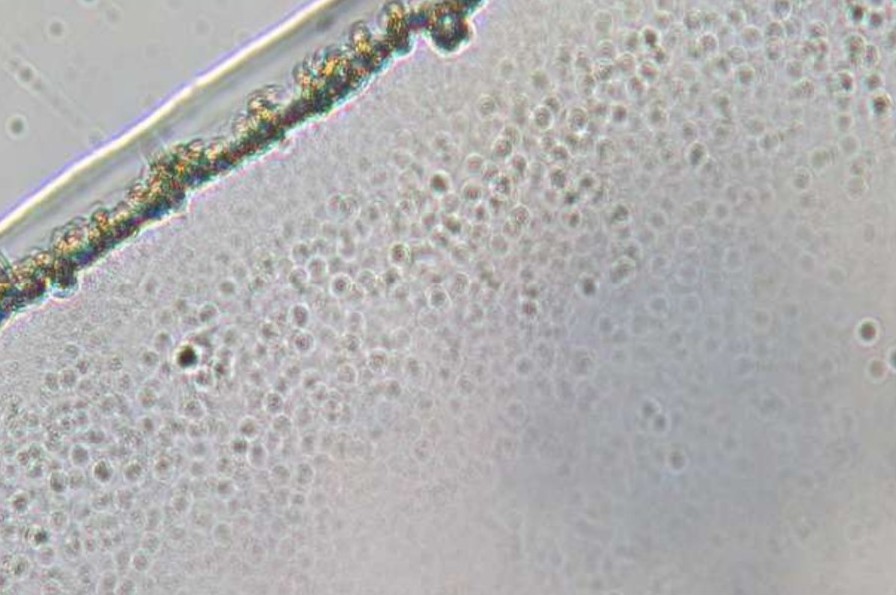
✓ No product degradationUMO Silica and Ionised Silica under the microscope, fresh production vs after 1 year.
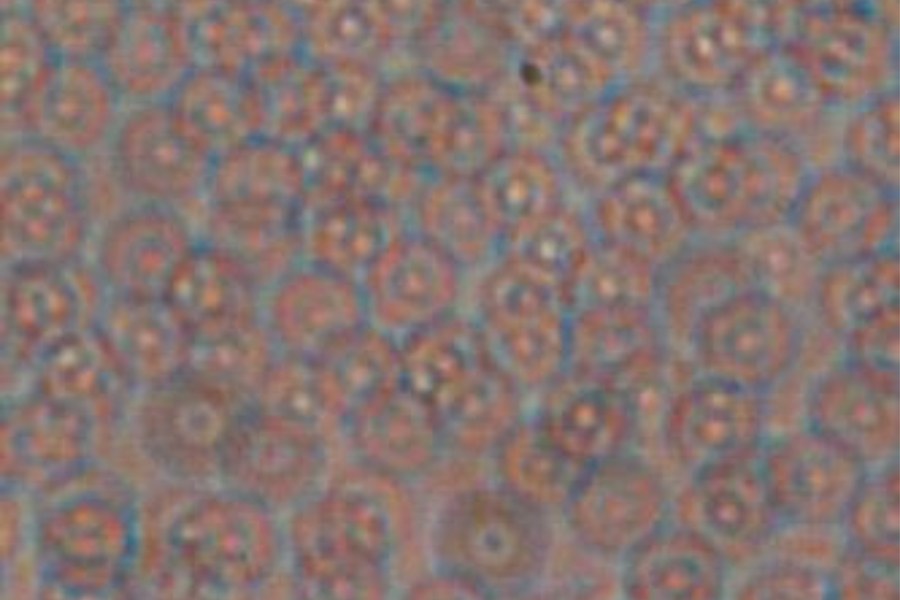
Proof 2 | Even when diluted in water, UMO still keeps its hexagon structure.
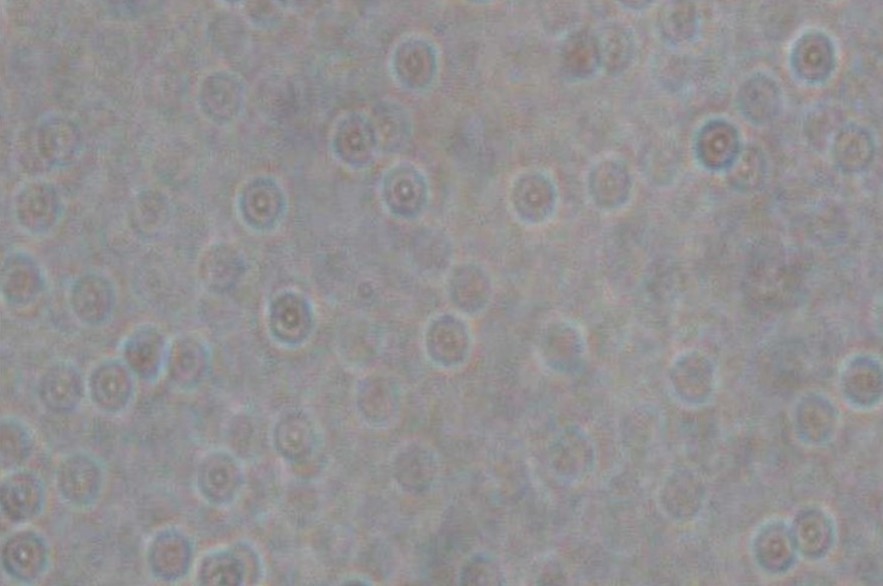
UMO under the microscope, ×400.
UMO under the microscope, ×1000.
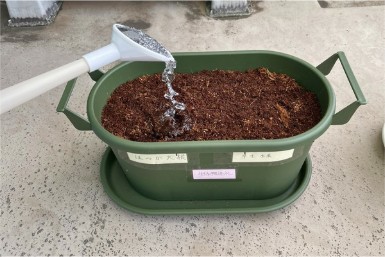
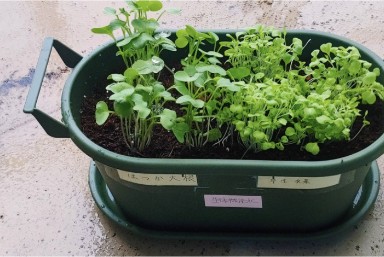
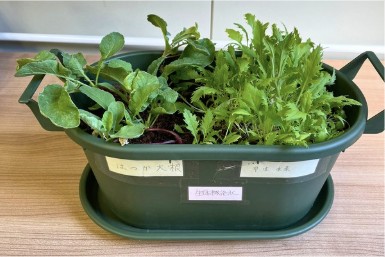
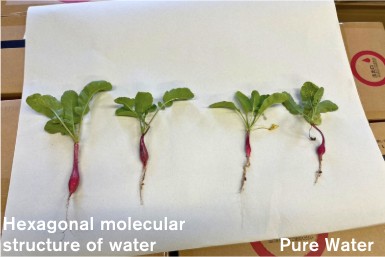
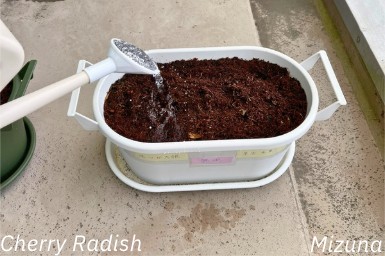
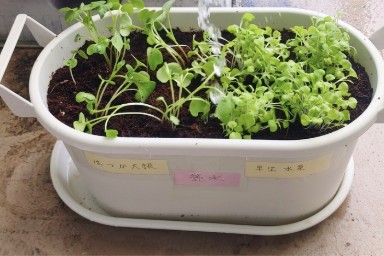
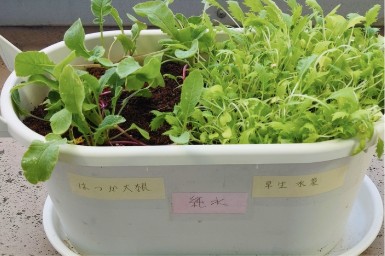
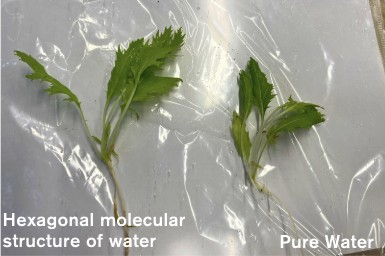
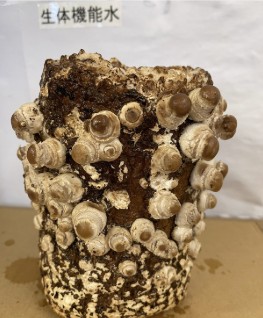
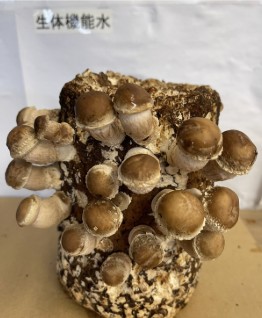
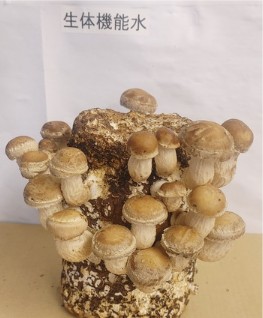
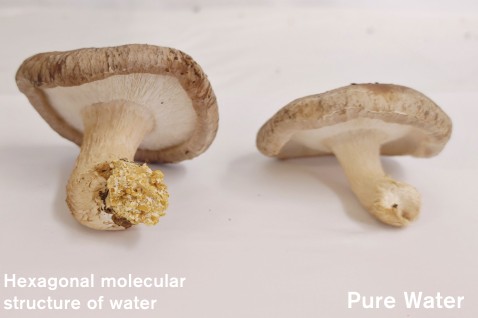
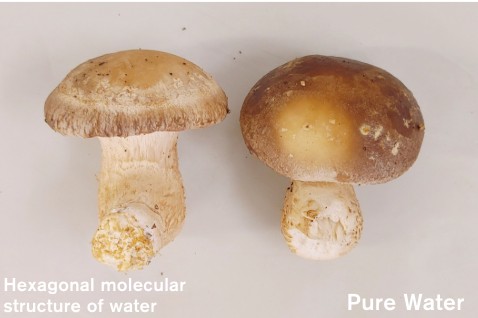
Proof 3 | Hexagonal-structure water (with no silicon mineral added) is also bioactive for plants.
Vegetables: Cherry radish | Mizuna
First day10 days34 daysHarvest
Hexagonal-structure waterHexagonal-structure water, First dayHexagonal-structure water, 10 daysHexagonal-structure water, 34 daysHexagonal-structure water, Harvest
Pure waterPure water, First dayPure water, 10 daysPure water, 34 daysPure water, Harvest
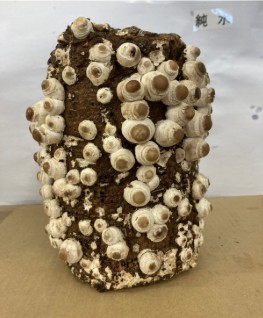
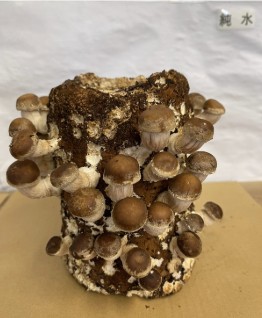
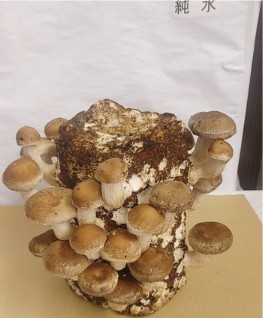
Mushroom: Shiitake
First day6 days10 daysHarvest
Hexagonal-structure waterHexagonal-structure water, First dayHexagonal-structure water, 6 daysHexagonal-structure water, 10 daysHexagonal-structure water, Harvest
Pure waterPure water, First dayPure water, 6 daysPure water, 10 daysPure water, Harvest
Nakajima, T. (2019).
The Connecting Power of Life: Water, Silicon, and Qi. JP Oversized, 9 Feb 2019.
中島敏樹. 結び合う命の力. 2019年2月9日.

How UMO Is Absorbed

The hexagon stays stable in the bottle. In the stomach, acid breaks it into six single silicic acid molecules, which the gut can absorb.

UMO hexagonal molecule Si6O6(OH)12
1UMO hexagonSi₆O₆(OH)₁₂0.8–1 nmStable, thanks to its hexagonal structure.
2Stomach acidSi₆O₆(OH)₁₂ + H⁺
→ 6 H₄SiO₄
pH 1–2Acid (mainly HCl) breaks the Si–O–Si bonds.
SiOHOHHOOH
3Silicic acid6 H₄SiO₄0.4 nmSix absorbable units.
4Small intestine6 H₄SiO₄0.4 nmPasses easily through the gut wall.
5BloodH₄SiO₄ Carried to tissues around the body.
Nakajima, T. (2019).
The Connecting Power of Life: Water, Silicon, and Qi. JP Oversized, 9 Feb 2019.
中島敏樹. 結び合う命の力. 2019年2月9日.

Crystal UMO® and Plant UMO®

Same final molecule. Only the concentration and specification differ.

Crystal UMO®
Plant UMO®
Name
Water-Soluble Silica
Water-Soluble Silicic Acid
Origin
Natural Quartz Crystal
Japanese rice husk
Final molecule
Si₆O₆(OH)₁₂
Si₆O₆(OH)₁₂
Form
Liquid | Powder
Liquid | Powder
Use
Supplements | Skincare
Beverage | Pets
Agriculture
Same molecule | Different concentration and specification
5 | Product Stability and Bioactivity

Test Reports & Certification

Made from natural quartz, but after the patented process it is no longer crystalline.
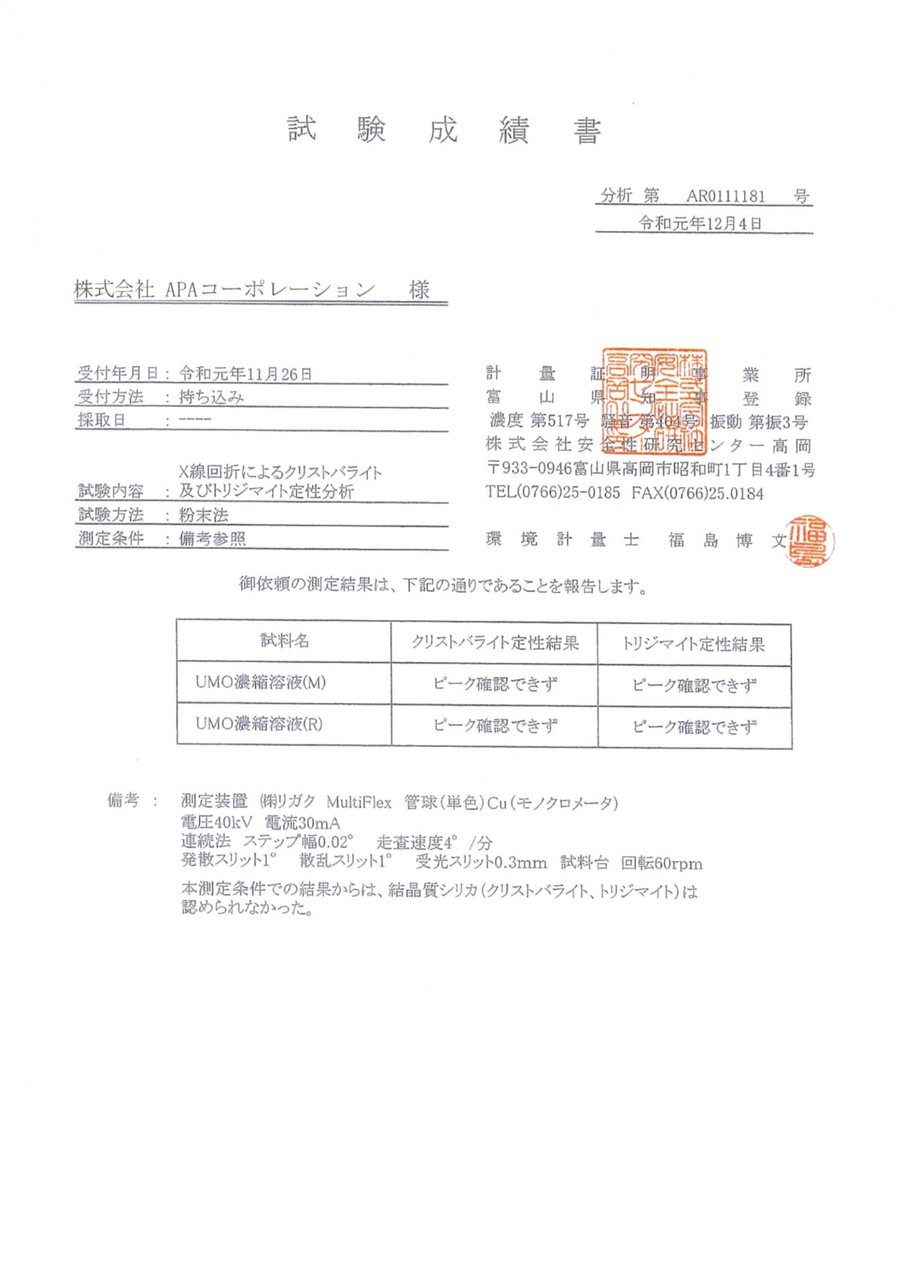
Test reports
Non-crystalline siliconXRD test | Report AR0111181 | 2019Non-crystalline silicon
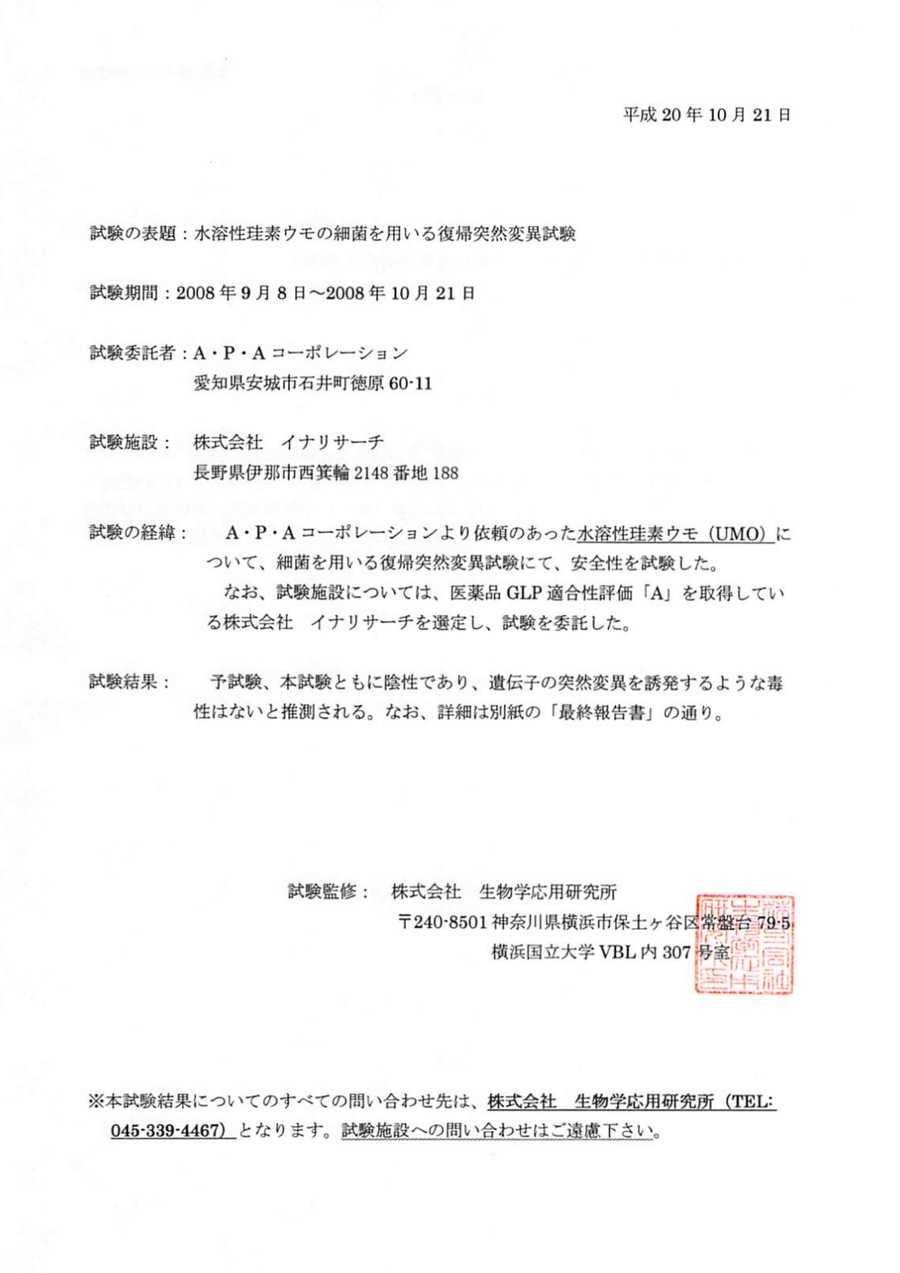
No genotoxic riskGLP studyNo genotoxic risk
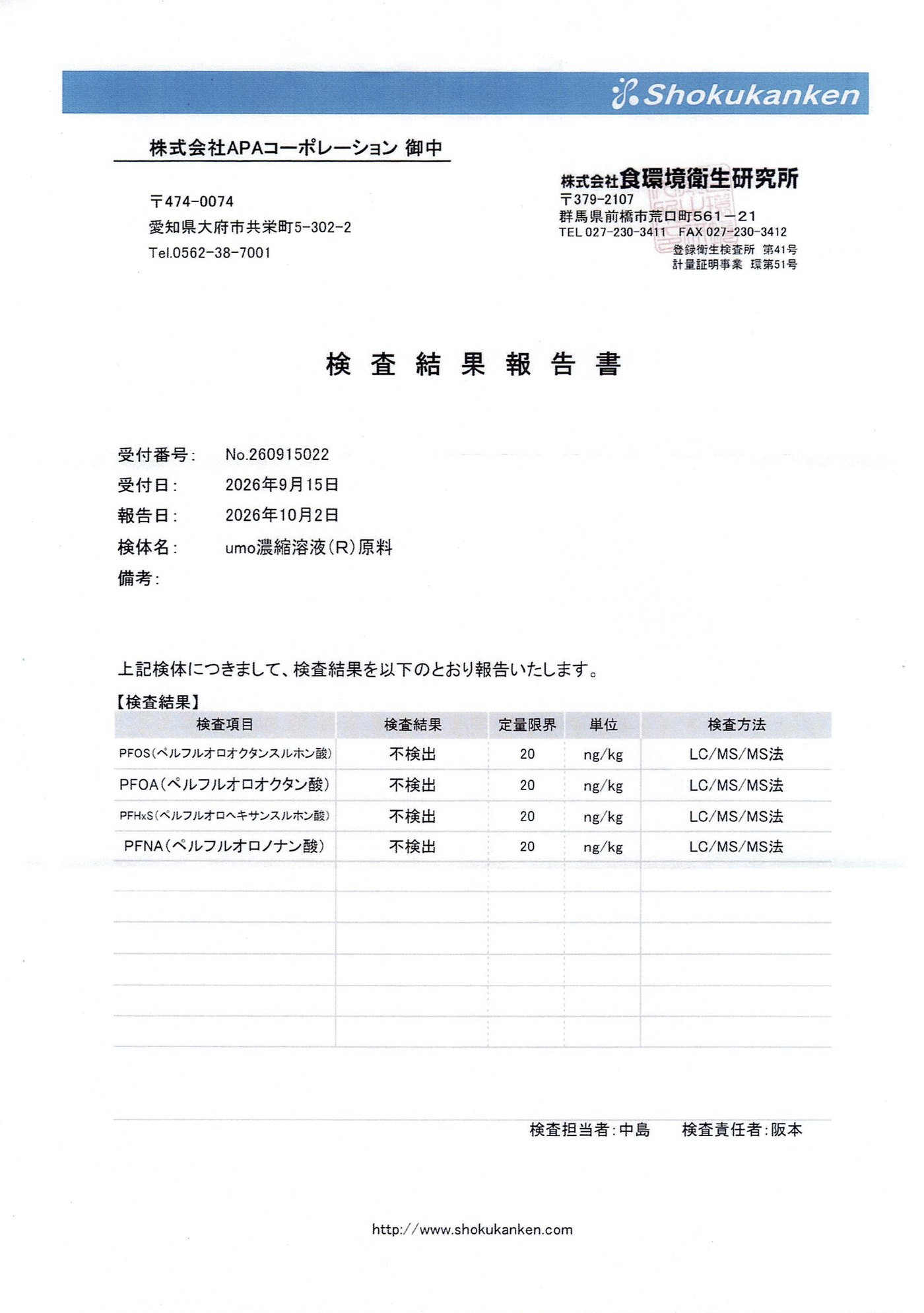
PFAS test (Shokukanken)2 Oct 2026PFAS test (Shokukanken)
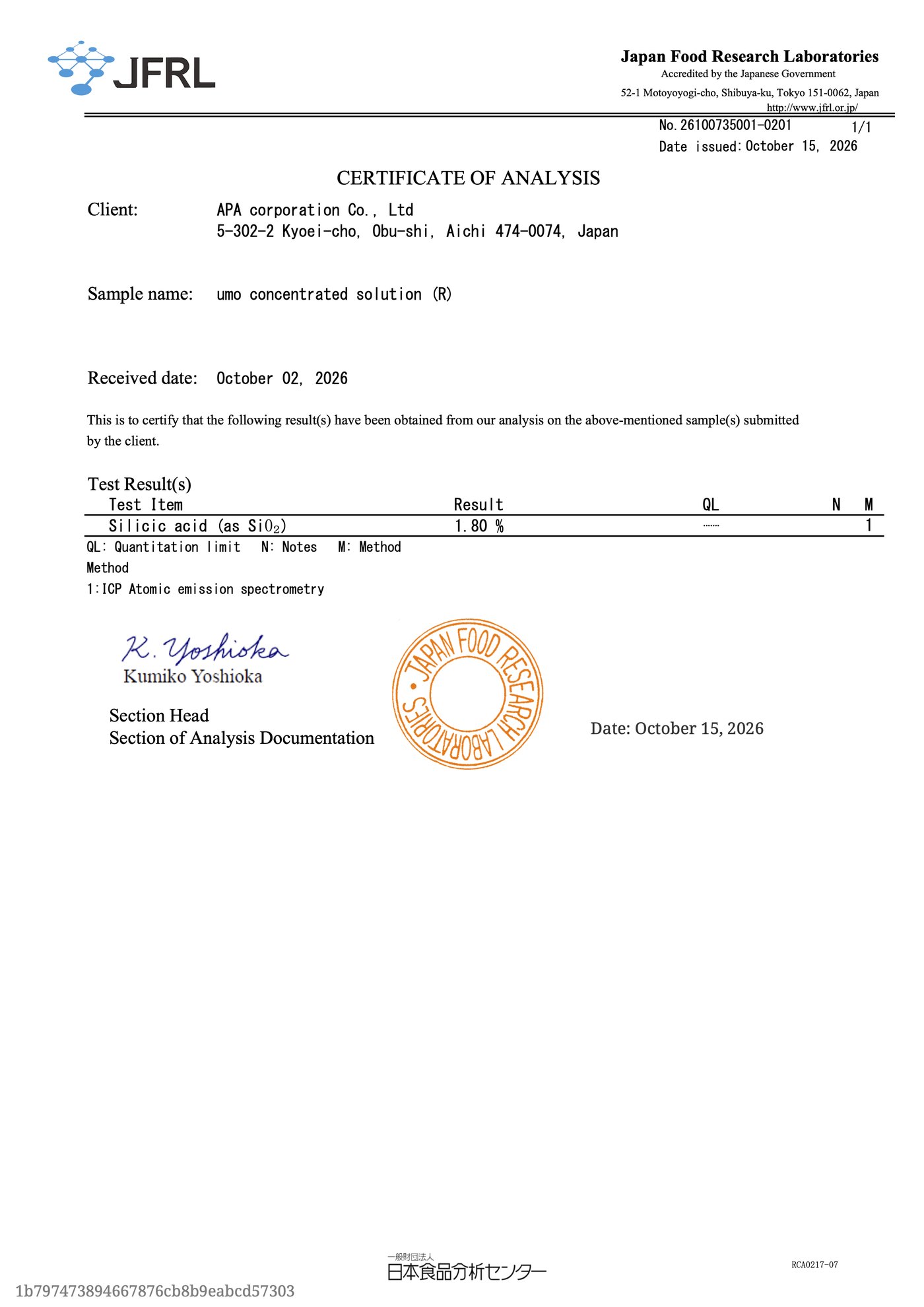
Silicic acid 1.80% (JFRL)15 Oct 2026Silicic acid 1.80% (JFRL)
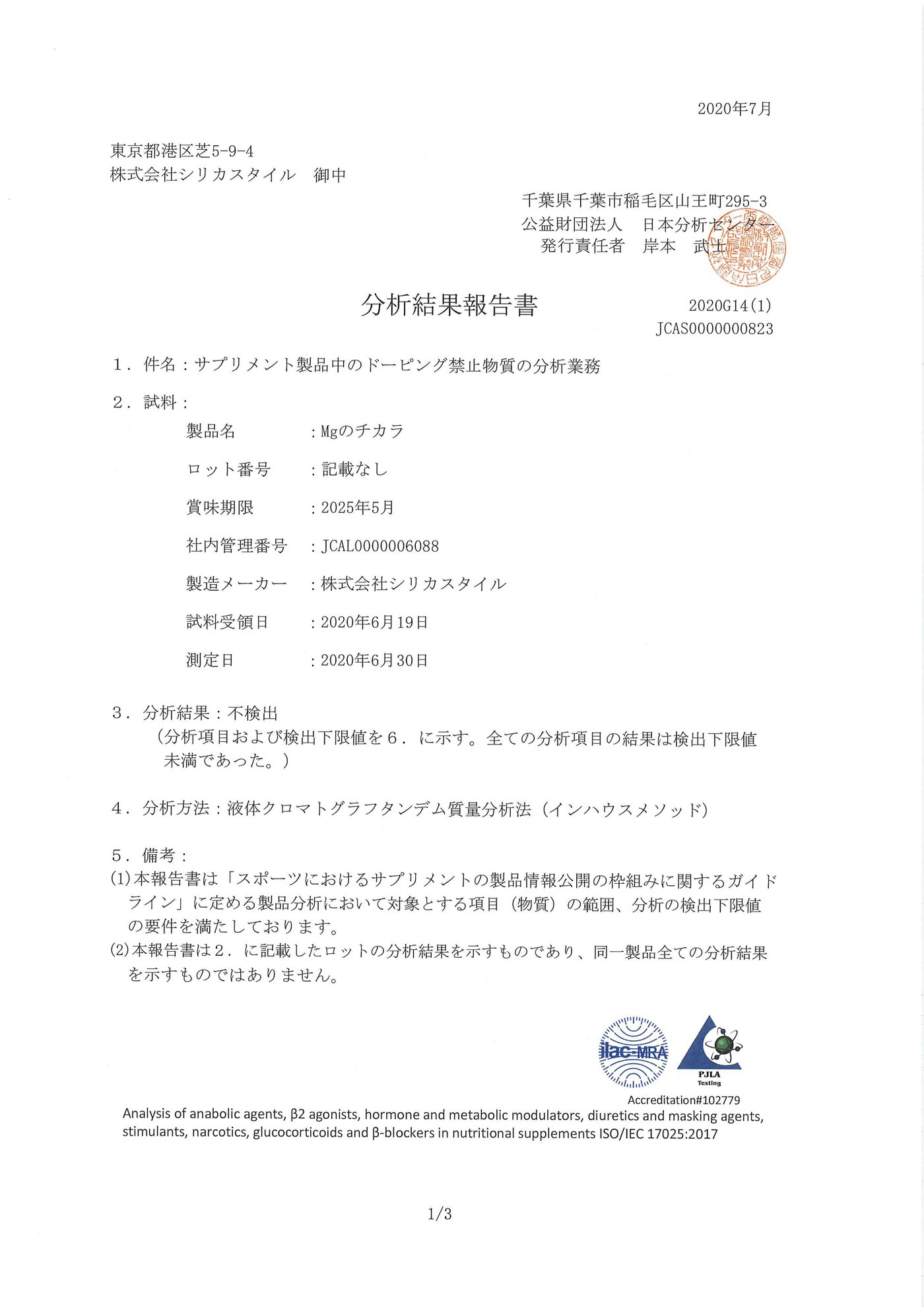
Anti-doping analysis reportAnti-dopingNo active substance
XRD test✓
No cristobaliteNot found ✓
XRD test✓
No tridymiteNot found ✓
GLP study✓
NegativeNo cell toxicity, no gene mutation ✓
PFAS test✓
Not detectedPFOS, PFOA, PFHxS, PFNA ✓
·X-ray diffraction (XRD) identifies crystal structure. UMO is 100% non-crystalline silicon.
·The safety study under Good Laboratory Practice (GLP) found no genotoxic risk, in both the screening test and the main study.
·Four PFAS compounds (PFOS, PFOA, PFHxS, PFNA) were not detected in the UMO concentrated solution raw material. Limit of quantification: 20 ng/kg.
Certificates
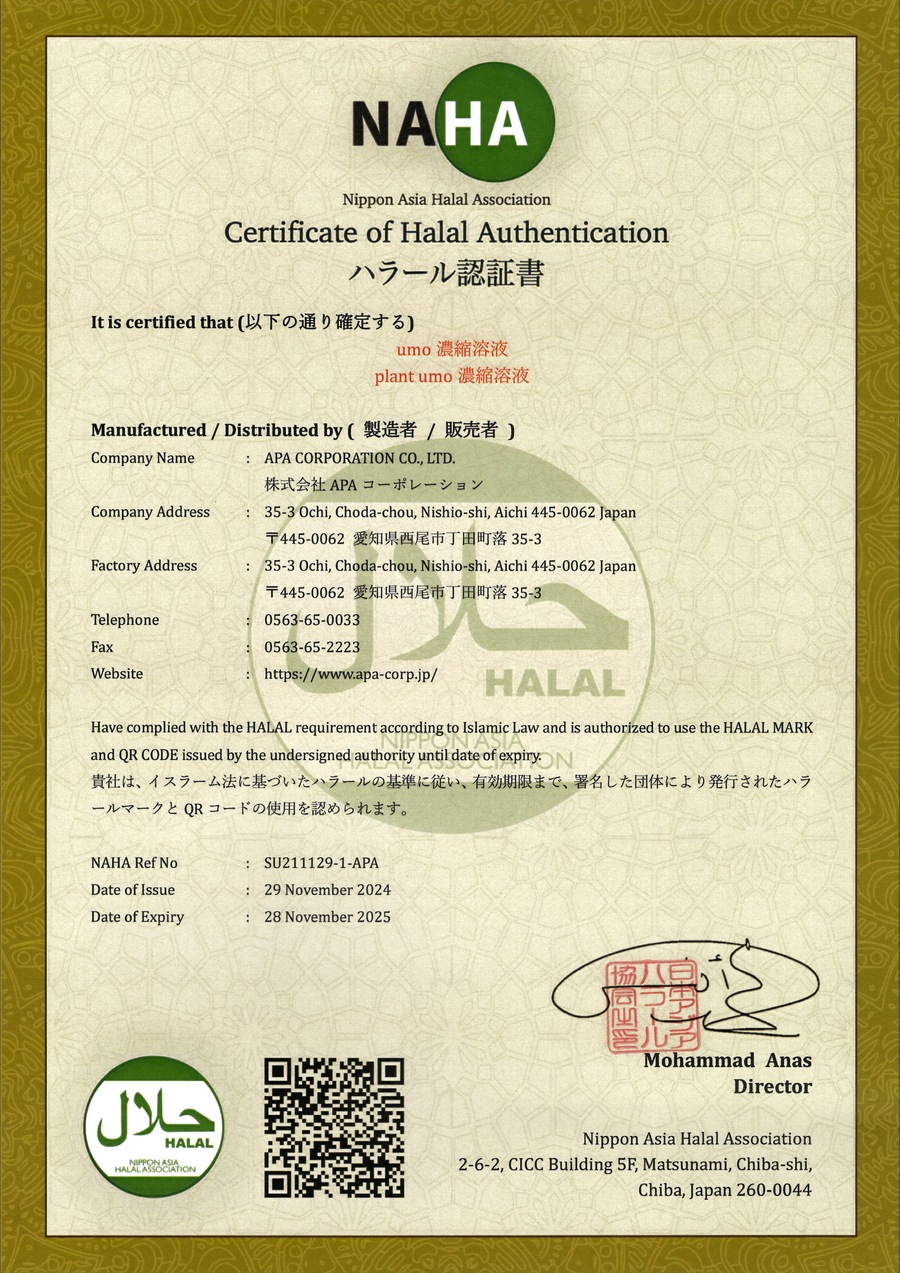
Halal (NAHA)Ref. SU211129-1-APAHalal (NAHA)
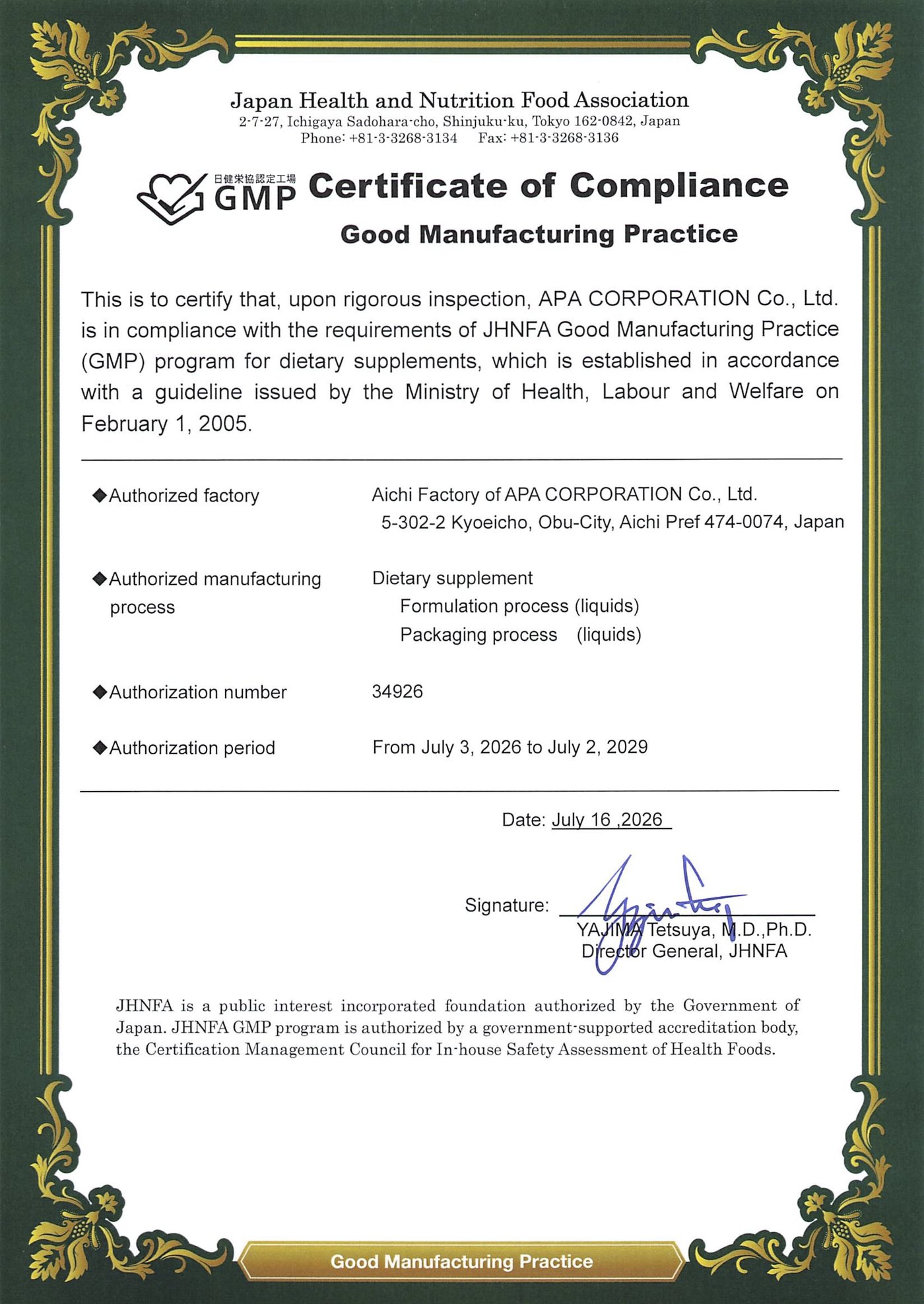
JHNFA GMP, dietary supplementsValid to 2 Jul 2029JHNFA GMP, dietary supplements
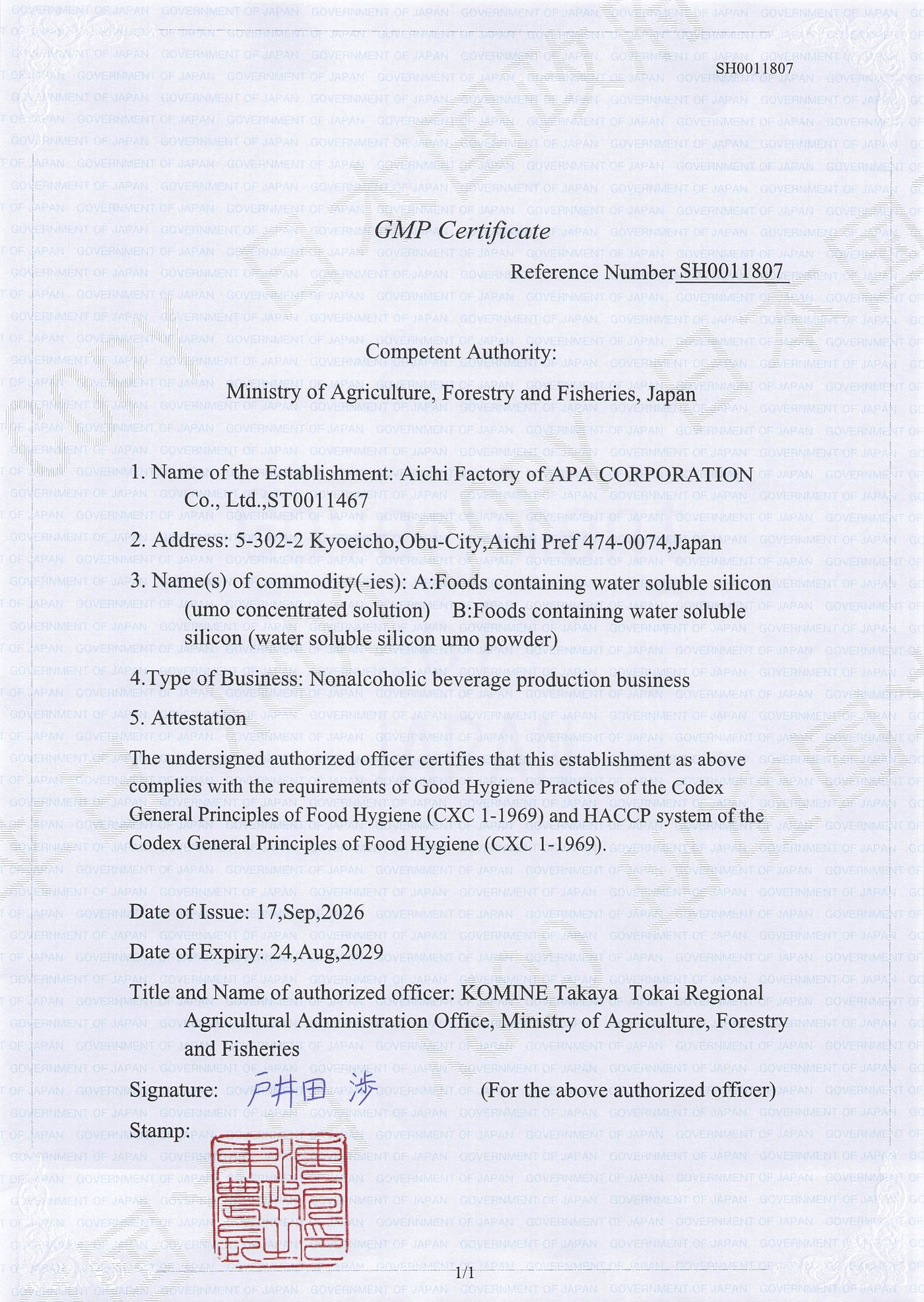
MAFF GHP and HACCPRef. SH0011807 | Valid to 24 Aug 2029MAFF GHP and HACCP
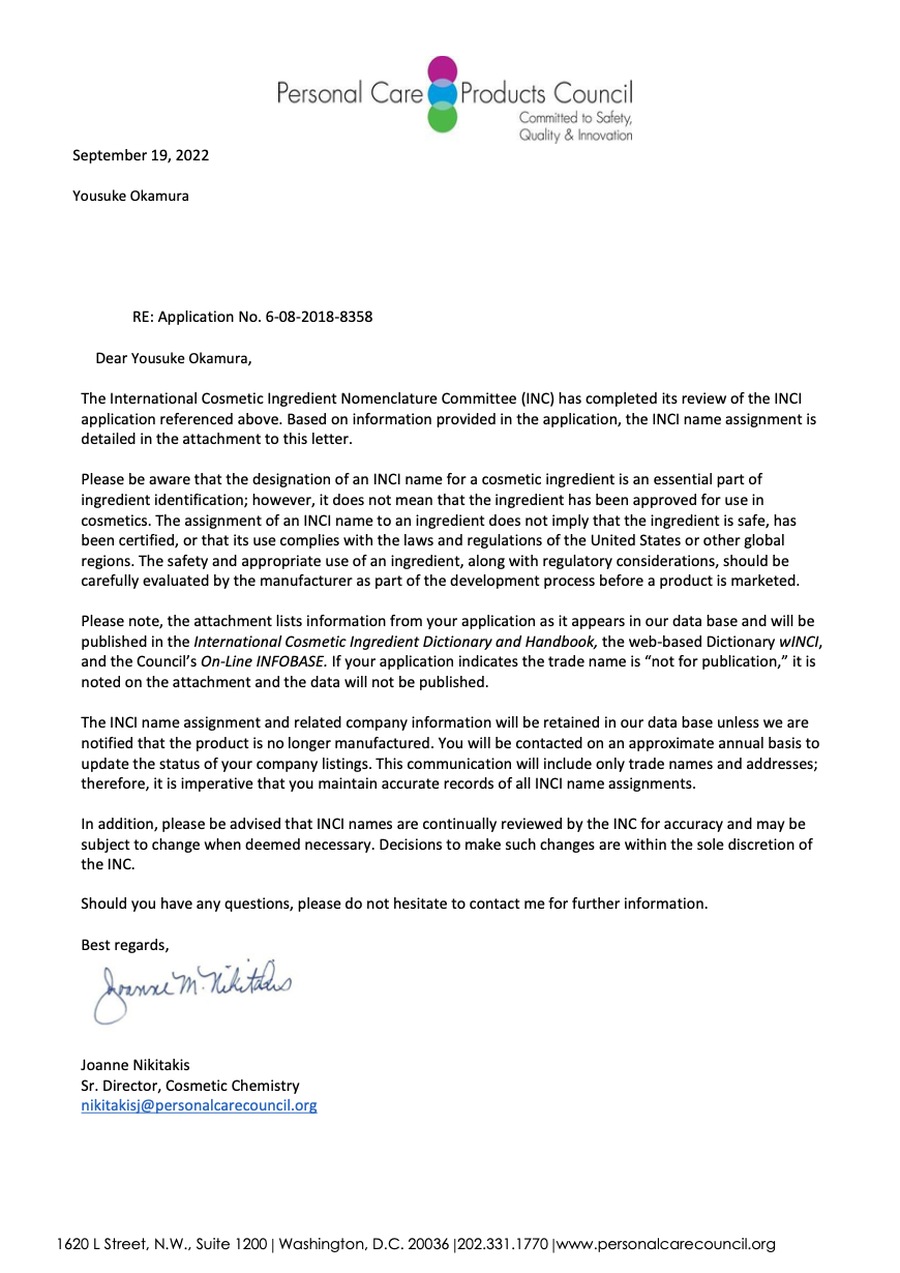
INCI name registration (PCPC)Hydrated Silica | App. No. 6-08-2018-8358 | 19 Sep 2022INCI name registration (PCPC)
·Halal certified by the Nippon Asia Halal Association. Indonesia’s BPJPH recognises NAHA certificates, with the same legal effect for cross-border clearance and sales.
·Made at APA Corporation’s Aichi factory, certified under JHNFA GMP and by Japan’s Ministry of Agriculture, Forestry and Fisheries (MAFF) for hygiene and HACCP.
·The INCI letter registers the name Hydrated Silica. It is not a safety approval.

Why Choose UMO® Silicon?

Three reasons.
190%Market share in JapanMarket Leader in Japan
·APA Corporation is the first company in Japan to develop concentrated water-soluble silicon minerals, in 2004.
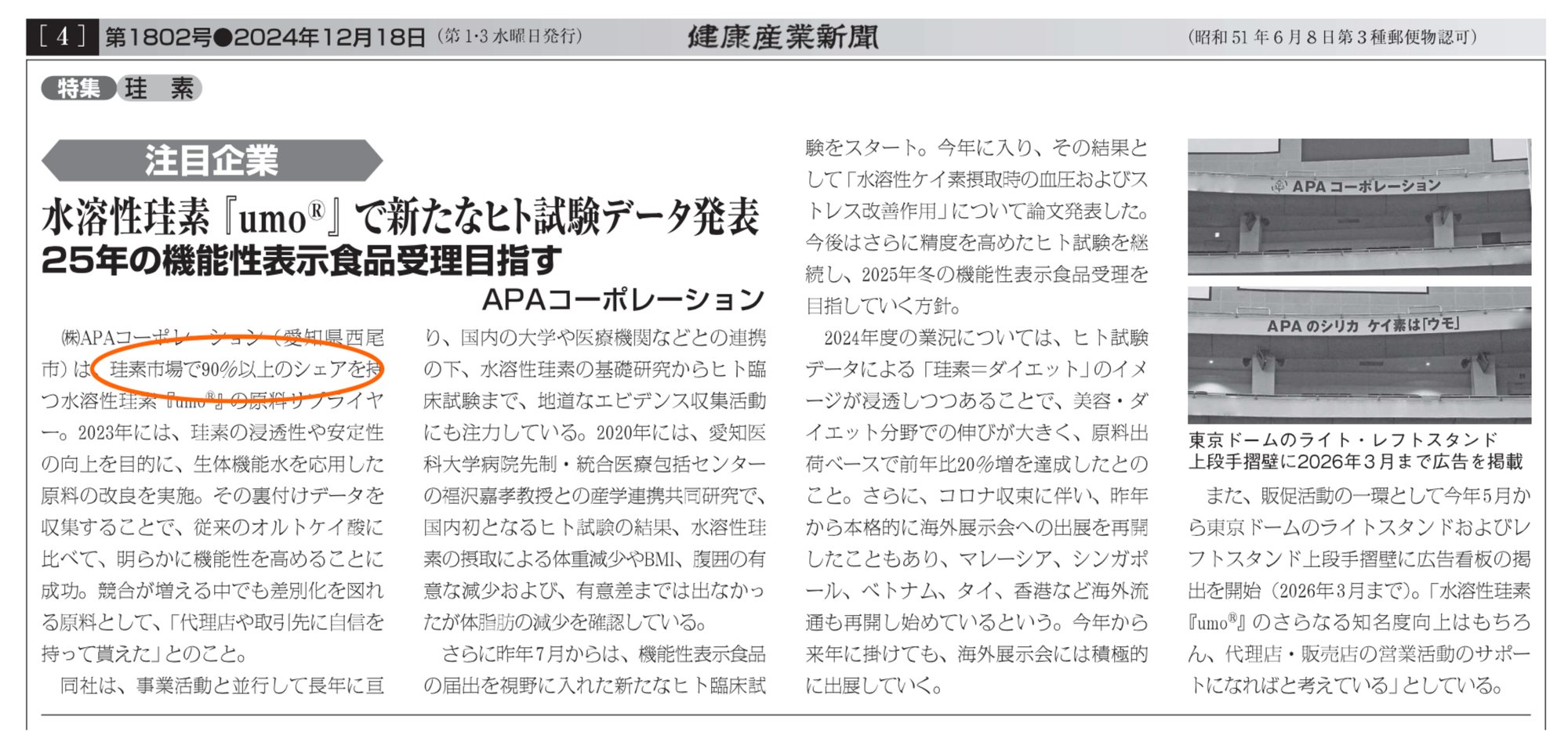
·UMO Silicon now holds 90% of the market share for concentrated water-soluble silicon minerals in Japan, with an annual production of 500 tons.
20.8–1.0 nmHexagonal nano‑oligosiliconPatented Technology and Molecular Structure
·For better product stability, and improved bioavailability and absorption in the human body.
330Scientific studiesProven and Trusted
·Backed by 30 scientific studies on safety and function.
·Includes data on safety and functionality.
In the Japanese press
Kenko Sangyo Shimbun, 18 Dec 2024: APA Corporation holds over 90% share of the silicon market in Japan
Kenko Sangyo Shimbun (健康産業新聞), 18 Dec 2024, No. 1802. Circled: APA Corporation holds over 90% of the silicon market.

Research Papers

Scientific research papers supporting the safety and efficacy of UMO®.
Human Test
Investigation of the Usefulness of Water-Soluble Silicon in Fatty Liver Complicated by Lifestyle-Related Diseases.
Overview of the Expected Blood Pressure Improvement Effect of Water-Soluble Silicon.
Heavy Metal Detox.
Functionality
Renal Function Evaluation and Safety Assessment Using a Rat Model of Adenine-Induced Nephropathy.
Inhibition of Fatty Liver and Reduction of Fecal Odor by Water-Soluble Silicon in Mice Fed a High-Fat Diet.
Stress-Strain Analysis of Bones and Blood Vessels in Rats.
The Effect of Silicon Minerals on Immunity.
Reactive Oxygen Biomedical Test.
Radioactive Material Washing Test.
Effect of Commercial Silicon Agents on Vascular Strength in Laying Hens.
Antibacterial
Virus Inactivation Test.
Preservation Efficacy Test.
Antibacterial Test.
Safety
Acute Oral Toxicity Test.
Skin Corrosion Test.
Reverse Mutation Test.
Beauty Related
Evaluation of Elastase Inhibitory Activity.
Effect on Hyaluronic Acid Production.
Impact on Facial Expression Wrinkles.
Changes in Relative Water Transpiration Before and After Application.
Hair-Drawing Property Test.
Effects on Skin Moisturization and Elasticity.
Tyrosinase and Elastase Inhibitory Activity.
Agriculture and Livestock
Test for Soil Microbial Diversification and Activity.
Freshness and Quality Retention Test.
Improvement of Meat Quality and Reduction of Fecal Odor Through Water-Soluble Silicon Administration in Broilers.
Effects of Commercial Silicon Agents on Free Amino Acids in Egg Yolk.
Other
Taste Analysis.
Deodorant Effect.
Certification by the Japan Anti-Doping Agency.
Coming SoonHuman clinical trials are ongoing, with results expected by the end of 2027.
Tottori University
Blood pressure (Prehypertension)Human clinical trial, n = 30Blood pressure regulation study for functional labelling.Lead: Dr. Jimbo, Faculty of Medicine, Tottori University
Monash University Malaysia
Blood sugar (prediabetes)Human clinical trial, n = 30Clinical benefits of water-soluble silicon for blood sugar.Partner: PRIMANEXUS clinical research, Malaysia
Chiba University
Male vitality (ED)Human clinical trial, n = 30Effect of water-soluble silicon on male sexual function.Lead: Prof. Tamura, Chiba University
Aichi Medical University Hospital
Bone health (osteoporosis)Human clinical trial, n = 100Bone density in middle-aged and older adults.Partner: Prof. Nakamura, Aichi Medical University Hospital
Toyama Prefectural University
Plant UMO® on tomatoesApplication studyHighly concentrated plant-derived silicon solution
for tomato growing and farm optimisation.
Lead: Dr. Tachida, Toyama Prefectural University

Be Careful When Choosing

Many similar silicon products are entering the market. Most are not fully tested for function, safety or amorphous structure. Ask the maker for evidence.
1
Plant or natural silicon is not always safe.Heat can turn non-crystalline silicon into crystalline silicon.
Plant
Non-crystalline siliconRice husk, bamboo, horsetail
→
Heat
Extract and concentrateAtoms gain energy
→
Result✕
Crystalline siliconNot safe to take
2
Mineral water can contain crystalline silicon.Not every water that contains silicon is safe to drink.
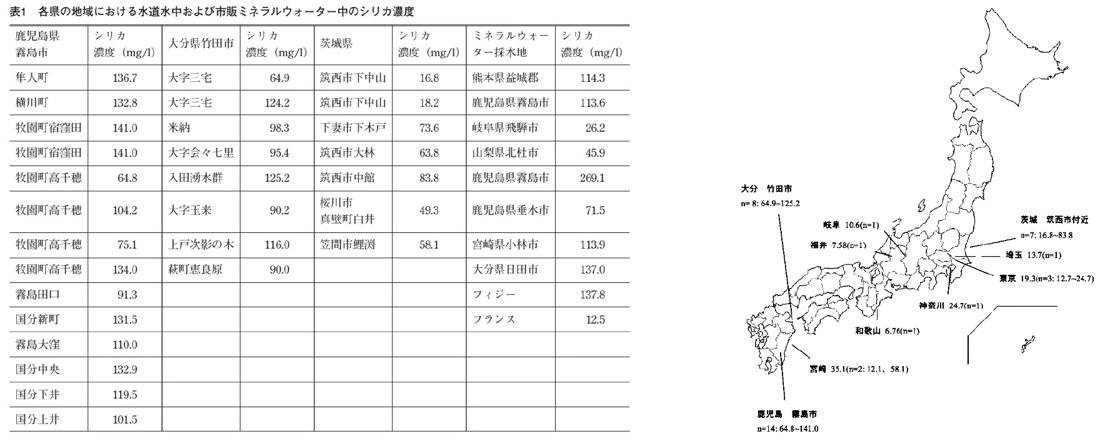
2013A 2013 study by Tazaki (Japan) found that stray dogs living in areas where drinking water has a higher silicon content had a higher rate of kidney stones. This suggests that many mineral waters contain silicon in crystalline form.
Tazaki et al. (2013): silica concentration (mg/L) in tap water and bottled mineral water across Japan.
Tazaki et al. (2013). Silica concentration (mg/L) in tap water and bottled mineral water across Japan.
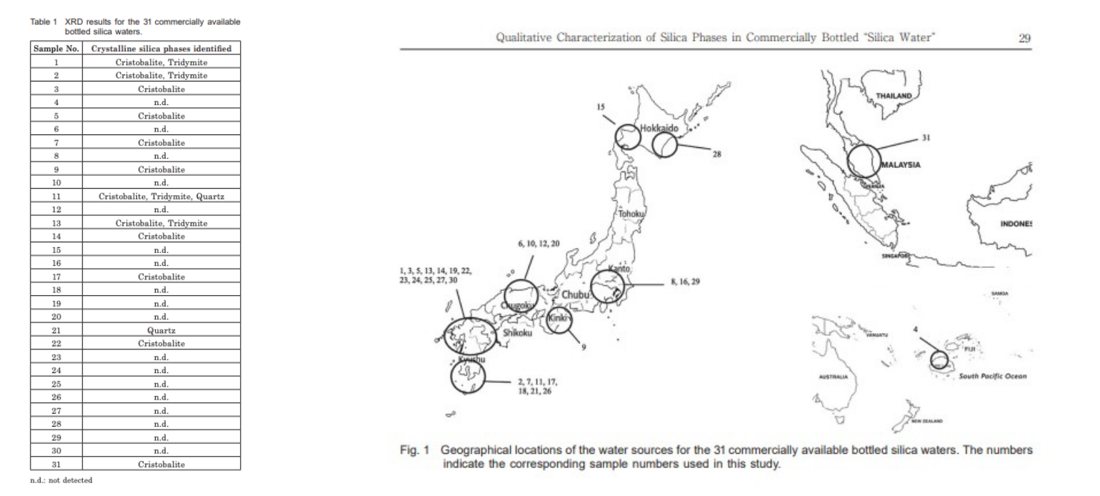
2026The latest study, by Tateda et al. (2026), tested 31 mineral waters containing silica minerals. 13 of them (about 42%) contained crystalline silica.
!Health risk. Crystalline silica may be carcinogenic if inhaled or ingested improperly.
Tateda et al. (2026): XRD results for the 31 commercially bottled silica waters.
Tateda et al. (2026). XRD results and sources of the 31 commercially bottled silica waters.
3
Higher silicon is not always better.Food and supplement limit: 9,300 ppm (0.93%) for liquid. Higher levels are for cleaning or industry.
Food and supplements
≤ 9,300 ppm0.93% silicon ✓
Cleaning or industrial
> 9,300 ppmNot food grade ✕
Tazaki Y. et al. (2013). Silica concentration in tap water and bottled mineral water in Japan. | Tateda M. et al. (2026). Qualitative characterization of silica phases in commercially bottled “silica water”. Jpn J Water Treat Biol 62(2), 27–36. doi:10.2521/jswtb.62.27

Bring UMO® to Your Product

Tell us what you make.
We reply with the right documents and samples.

Tell us what you need.

I would like to
This page presents research on the ingredient only.It does not make any claim about a finished product.Results come from the stated test conditions and may not apply to other products or individuals.KIWITA SDN. BHD. is not responsible for how the ingredient is used in any finished product or for any claims made about it.Terms & DisclaimerThe summaries on this page are prepared by KIWITA SDN. BHD. from third-party test reports and published studies. They are for reference only and are not medical, regulatory or professional advice.KIWITA has made reasonable efforts to summarise them accurately. KIWITA does not guarantee that the summaries, figures or translations are complete, current or free from error. If there is any difference, the original report prevails.Test results apply only to the stated samples and conditions. They are not a guarantee of performance, safety, efficacy or fitness for any product, market or use.You are responsible for checking the original reports and for meeting the laws and regulations of your market, including claims, labelling and registration.To the fullest extent permitted by law, KIWITA SDN. BHD. is not liable for any loss or damage arising from reliance on this page. Samples, specifications, quotations and prices are subject to a separate written agreement.