Great Salt Lake, Utah, USA
MGF® Magnesium Flakes
100% natural magnesium chloride bath salt from the Great Salt Lake, Utah.Transform your daily bath into a relaxing mineral spa.
Origin
Natural Magnesium Chloride Bath Salt from the Great Salt Lake, Utah
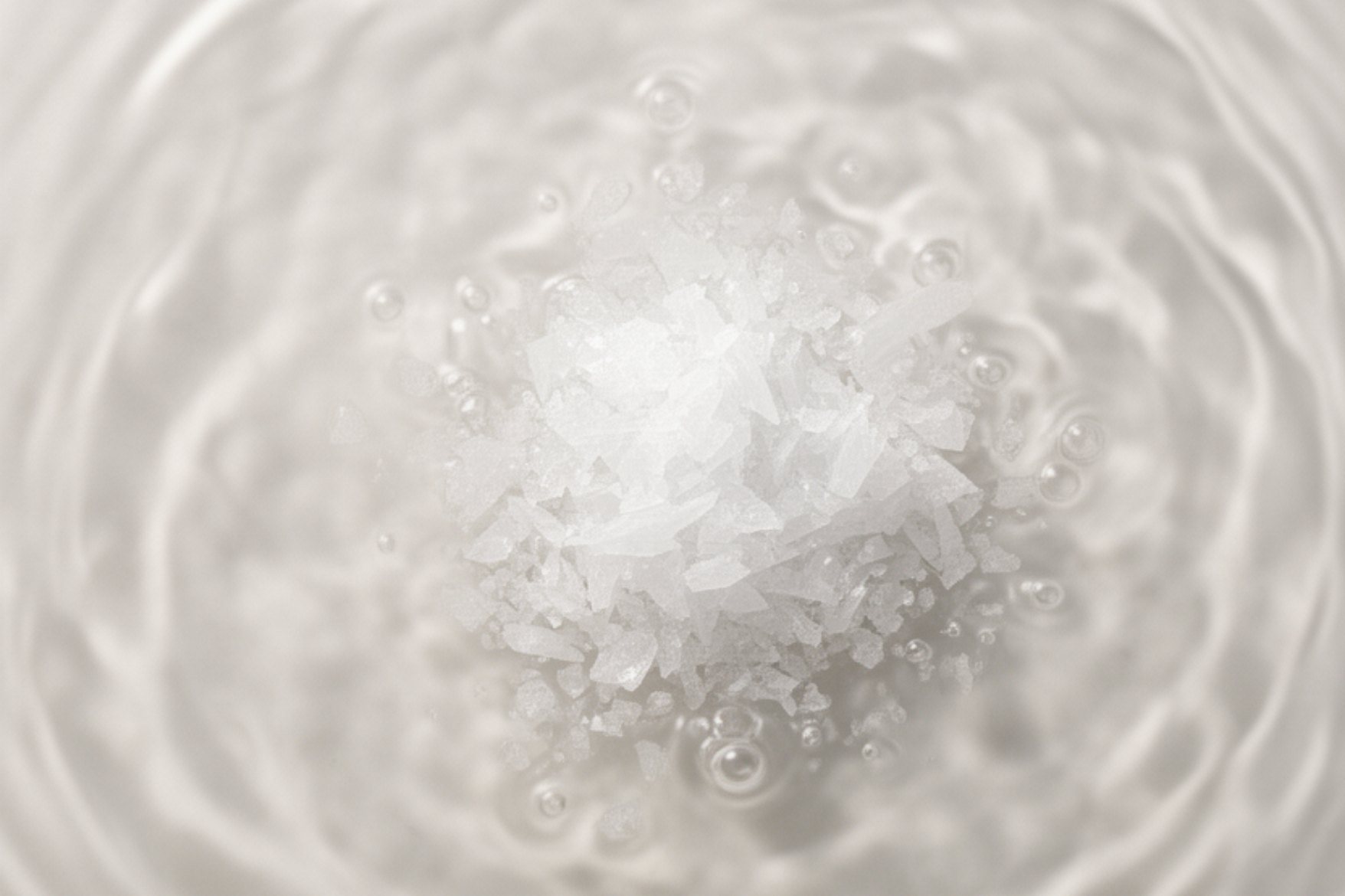
Enjoy 100% natural magnesium bath salts sourced from the Great Salt Lake in Utah, USA. With a 30% mineral concentration, identical to the Dead Sea, these natural flakes dissolve to warm the body and support a deeply restorative bath time.
Great Salt Lake
The Great Salt Lake: A Treasure House of Natural Minerals
The largest saltwater lake in the Western Hemisphere.
salty enough for people to float.30%High-concentration minerals dissolved in the lake water
Japan.7× Lake BiwaThe largest saltwater lake in the Western Hemisphere
Production
How MGF® Magnesium Flakes Are Made
Harvested from natural lake water, sun-dried and purified into high-quality mineral flakes, MGF turns your daily bath into a moment of rest.
No additives: 100% natural minerals. The lake’s high salinity leaves no fish or other living things, so the ecosystem is not disturbed.
Specification
MGF® Magnesium Flakes: Product Specification
Composition
Mineral Composition of MGF® Magnesium Flakes
MGF® is a magnesium chloride bath salt, highly concentrated with natural minerals.
Comparison
Magnesium Content per 100 g: MGF® vs Other Magnesium Bath Salts
mg per 100 g
Analysis based on the concentration of 10 g of bath salt dissolved in 200 ml of water.
Moisturising evidence
MGF® and Hyaluronic Acid Gene Expression
Diluted MGF was added to human dermal cell culture and compared with no addition, using real-time PCR.
Relative gene expression (no addition = 1.00)
HAS1 ↑
Increased. Hyaluronic acid synthase 1 promotes hyaluronic acid production.
HAS2 ↑
Increased. Hyaluronic acid synthase 2 promotes hyaluronic acid production.
HYAL1 ↓
Decreased. Hyaluronidase 1 breaks down hyaluronic acid.
Cell culture test performed by Kirei Test Lab Co., Ltd.
MGF vs Epsom salt
MGF® Magnesium Chloride vs Epsom Salt (Magnesium Sulfate)
Epsom salt is well known as a magnesium-based bath salt, but components and effects vary significantly depending on the type of magnesium used.
| Magnesium Flakes MGF | Epsom salt | |
|---|---|---|
| Main component | Magnesium chloride | Magnesium sulfate |
| Refining method | Natural | Artificial (synthetic) |
| Spring type | Chloride spring | Sulfate spring |
| Hot spring benefits | Cuts, circulation, cold sensitivity, mood, skin | Cuts, circulation, cold sensitivity, mood, skin |
| Transdermal absorption | Yes | Yes |
| Skin effect | Moisturising | Can be drying |
| Note | Deeply hydrates skin. | Sulfates may strip natural oils. |
Hot spring analysis
Five Key Hot Spring Componentsin MGF® Bath Salt
Results per kg.
excellent sweating effect.149,000mgHot spring law: Dissolved substances over 10 g (about 15x)
prevents the after-bath chill.102,471mgHot spring law: Main component is chloride
effective for pain and fatigue.782mgHot spring law: Over 5 mg (about 150x)
removes dead skin cells and cleanses pores.750mgHot spring law: Main component is bicarbonate ion
Analysis performed by Science & Technology Development Center Co., Ltd.(Nagano Prefecture Hot Spring Analysis Registration No. 3).
OEM
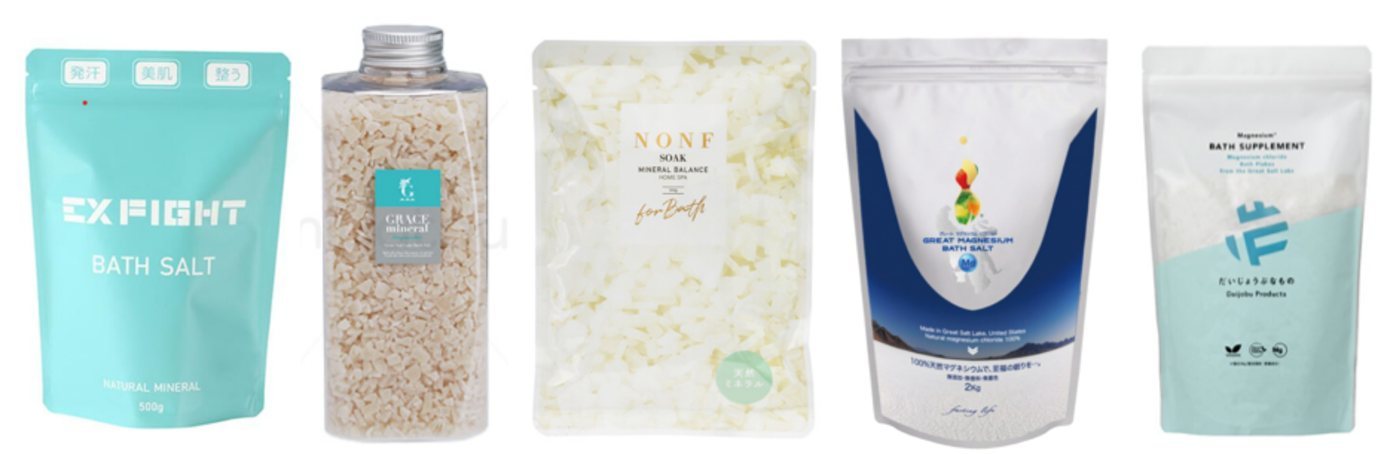
MGF® OEM Bath Salt Products in Japan
MGF®
Looking for MGF® magnesium flakes for your product?
FAQ
MGF® Magnesium Flakes: Frequently Asked Questions
What are MGF® Magnesium Flakes?
MGF® are magnesium chloride flakes harvested from Great Salt Lake, Utah, USA, sun-dried and purified. The cosmetic ingredient specification (24 February 2026) gives magnesium chloride 43–52 %, total plate count ≤ 100 CFU/g, arsenic ≤ 2 ppm and heavy metals not detected. The INCI / label name is Sea Water Extract.
What are they used for?
As a bath additive (bath salt) in cosmetics and general goods. MGF® is not an ingestible product.
What is the chemical identity on the SDS?
Magnesium chloride hexahydrate, CAS 7791-18-6. GHS classification is not applicable.
How are they packed and stored?
Supplied in 20 kg, 100 kg and 500 kg packs. Shelf life is 3 years after delivery when unopened; keep sealed and dry because the flakes absorb moisture.
Who supplies MGF® outside Japan?
KIWITA SDN. BHD., Penang, Malaysia, APA Corporation's overseas sales company, with the specification, SDS and COA.
Who is developing new products with magnesium flakes?
Spa, bath and body-care brands. MGF® Magnesium Flakes are magnesium chloride hexahydrate from the Great Salt Lake, used as a bath additive in bath salts and bath products. Supplied in 20 kg, 100 kg and 500 kg.
What should a formulator check when using the flakes?
Magnesium chloride is hygroscopic: keep packs sealed and dry, and account for moisture pick-up in filling. The SDS, specification and the analysis of a 10 g in 200 mL bath-salt solution are available from KIWITA.